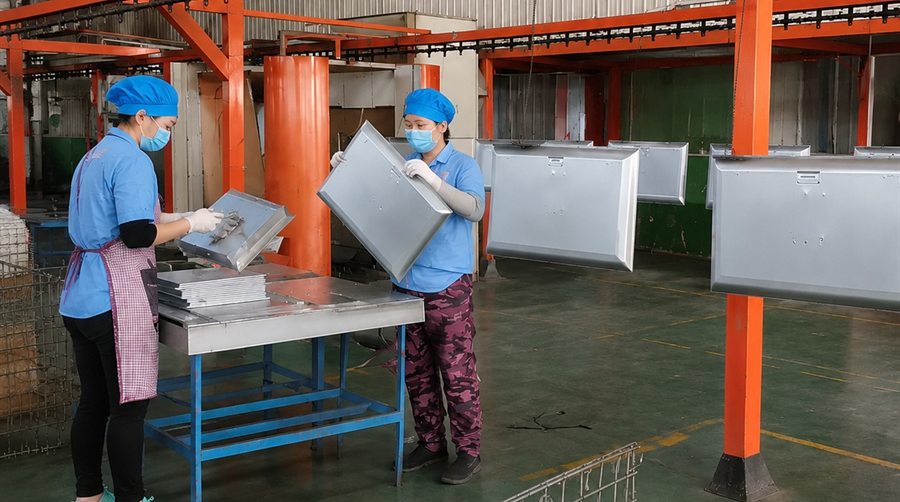
The finish decision is constrained before preference enters into it, because each process only works on certain base metals. Anodizing is an aluminium process. Passivation is a stainless steel process. Electroplating works on conductive substrates, most commonly steel. Powder coating is the only one of the four that works on essentially any metal that can survive the curing oven. So the powder coating vs anodizing comparison only arises when the part is aluminium — on steel, anodizing is simply not an option. The full base-metal guidance sits on our materials page.
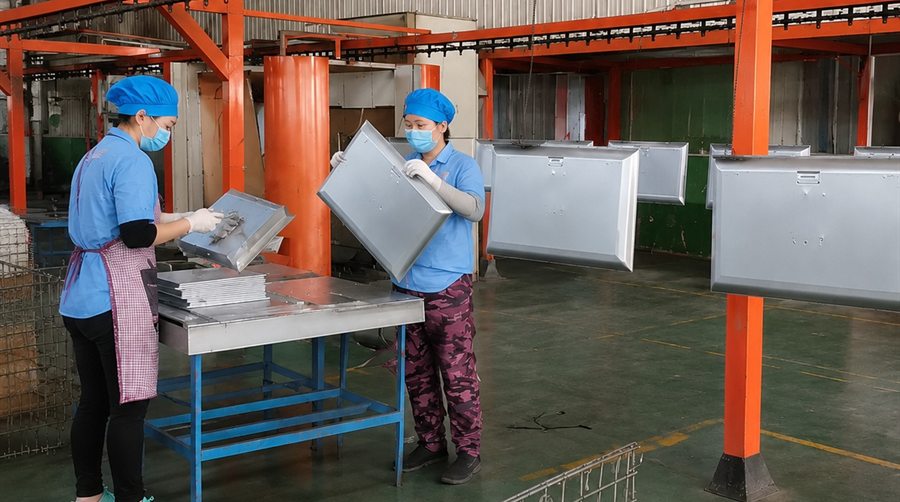
Once the base metal narrows the field, three questions decide the rest: does the finish need to conduct electricity, how much dimensional build-up can the part tolerate, and what corrosion environment is it going into? Answering those three in order resolves most specifications quickly.
This guide covers what each process does, where it fits, and how to write a finish callout that a supplier can actually quote against.
What each finish is
Powder coating
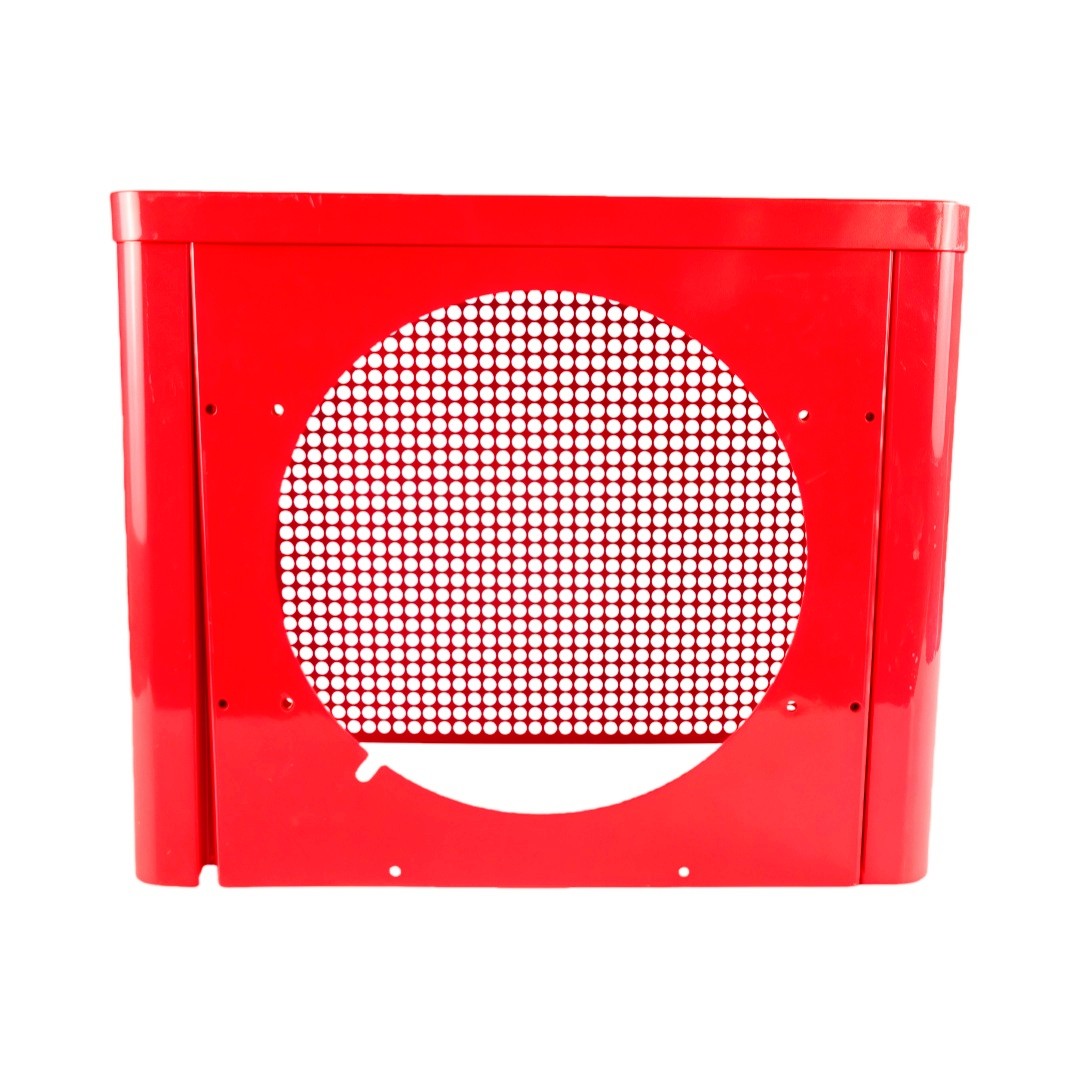
Dry polymer powder sprays electrostatically onto a grounded part and then cures in an oven, where it melts and flows into a continuous film. The result is a thick, tough, fully opaque coating available in an enormous colour and texture range.
Powder coating is a barrier finish: it protects by physically separating the metal from the environment. That makes surface preparation decisive — a coating over contamination or scale will look perfect and then fail from underneath. It is also an electrical insulator, which matters more often than people expect on enclosures requiring earth continuity.
Anodizing
Anodizing is an electrochemical conversion process for aluminium. The part becomes the anode in an acid electrolyte and the surface converts into a hard, porous aluminium oxide layer, which is then sealed. The oxide layer does not sit on top of the metal — it grows out of it, so it cannot chip or peel the way a coating can.
Type II sulphuric anodizing is the general-purpose decorative and protective option and accepts dye colours. Type III hard anodizing produces a considerably thicker, much harder layer for wear resistance. Anodizing is an insulator, and it builds dimension. As a working rule, around one third of the oxide layer penetrates into the metal and two thirds grows outward from the original surface. A hard anodized part therefore gains measurable size on every coated face.
Electroplating
A metal layer — zinc, nickel, chrome, tin, silver or gold — deposits electrolytically onto a conductive substrate. Zinc plating is the workhorse for steel corrosion protection, normally followed by a chromate or passivate conversion coating that substantially extends its life. Zinc protects sacrificially: it corrodes preferentially and shields the steel beneath even where the layer is scratched.
Plating is thin, so it preserves dimensions and fine detail, and it remains electrically conductive — the reason tin and silver plating are used on electrical contacts and busbars.
Passivation
Passivation is not a coating at all. It is a chemical treatment for stainless steel that removes free iron and other contaminants from the surface and encourages the natural chromium oxide film to reform uniformly. Nothing is added and dimensions do not change.
It matters because machining, grinding, welding and even handling with carbon steel tools can embed iron particles into a stainless surface. Those particles rust and initiate localised attack. Where welding has produced heat tint, pickle first to remove the chromium-depleted oxide layer; passivation follows.
Powder coating vs anodizing on aluminium
When the part is aluminium and both are available, the powder coating vs anodizing choice usually turns on four points.
- Colour. Powder coating offers essentially unlimited colours, including exact RAL matching, plus textures and gloss levels. Anodizing colour comes from dyeing a porous oxide layer, giving a narrower, more metallic-looking palette that can vary between batches and alloys.
- Appearance of the substrate. Anodizing is translucent, so the metal’s grain and any surface defects remain visible. Powder coating hides the substrate completely, which is either an advantage or a loss of character depending on the design intent.
- Wear resistance. Hard anodizing outperforms powder coating substantially on abrasion and cannot chip, because it is integral to the metal. Powder coating is tough but can chip on impact at an edge.
- Edge coverage. Powder coating tends to thin at sharp edges, which is where coating failures usually start. Anodizing grows uniformly over the whole surface including edges.
For outdoor architectural and enclosure work in a specific colour, powder coating usually wins. For functional aluminium parts needing wear resistance, dimensional stability and a metallic appearance, anodizing usually wins. Both are handled as part of our surface finishing stage, in the same plant as fabrication.
Powder coating vs anodizing: comparison table
| Attribute | Powder coating | Anodizing | Zinc electroplating | Passivation |
|---|---|---|---|---|
| Base metals | Most metals | Aluminium only | Steel and conductive substrates | Stainless steel only |
| Nature of finish | Applied polymer film | Converted oxide layer | Deposited metal layer | Chemical surface treatment |
| Typical thickness | 60 – 120 µm | 5 – 25 µm (Type II); 25 – 115 µm (Type III) | 5 – 25 µm | No measurable build-up |
| Dimensional impact | Significant | Moderate, half grows outward | Small | None |
| Electrically conductive | No — insulator | No — insulator | Yes | Yes |
| Corrosion protection | Barrier — good if preparation is sound | Good, excellent when sealed | Sacrificial — protects scratches | Restores stainless passive film |
| Colour options | Extensive, full RAL range | Limited dyed range | Clear, blue, yellow, black chromate | None — appearance unchanged |
| Abrasion resistance | Good | Very good, excellent hard anodized | Moderate | Not applicable |
| Chip or peel risk | Possible at edges and impacts | Very low — integral to metal | Low | Not applicable |
| Relative cost | Low to moderate | Moderate | Low to moderate | Low |
Powder coating vs anodizing on corrosion protection
Salt spray testing to ASTM B117 is the most commonly quoted comparison, and the most commonly misused. It is an accelerated laboratory test that ranks finishes against each other; it does not predict service life in years. Reaching a given number of hours in the cabinet does not prove any particular service life on a coastal installation.
What can be said generally is the direction of performance. Powder coating over properly prepared, pre-treated steel performs well as a barrier. However, any breach in the film exposes bare metal underneath, so edge coverage and handling damage matter. Zinc plating with chromate performs differently. It sacrifices itself to protect the steel, so a scratch does not immediately become a rust site. The layer is consumed over time, however. Sealed anodizing is durable on aluminium, and unsealed anodizing is considerably less so. Passivation restores stainless steel’s own resistance rather than adding protection on top. Grade choice changes how that surface performs, as our guide to 304 vs 316 vs 316L stainless steel explains.
For demanding outdoor service, duplex systems are common. Zinc plate or zinc-rich primer beneath powder coating combines sacrificial and barrier protection. If the environment is severe, specify the test standard and the acceptance criterion on the drawing rather than leaving it to interpretation.
Powder coating vs anodizing: dimensional build-up, threads and masking
Coating thickness is a dimension. On precision parts, account for it before the part is made rather than discovering it at assembly.
- Threaded holes. Powder coating will bridge and clog small threads. Either mask them, tap after coating, or specify oversize tapping. State which on the drawing.
- Press-fit and bearing bores. Mask, or machine after finishing. A 60 to 120 µm film on both walls of a bore removes clearance quickly.
- Earth points and contact surfaces. Powder coating and anodizing both insulate. Any surface that must carry earth continuity or make electrical contact needs masking, and the masked area must be shown on the drawing.
- Mating faces and gasket seats. Coating build-up alters flatness and compression. Decide whether the gasket seats on coated or bare metal.
- Sharp edges. Powder coating thins at sharp edges. A small radius or chamfer improves coverage measurably and costs little.
Masking is a manual operation and it is charged as one. Fewer, larger masked areas cost less than many small ones, so consolidating them during design is a genuine saving on enclosures with many earth studs and mounting points. The enclosure construction — welded or deep drawn — also changes finishing economics; our guide to welded vs deep drawn enclosures covers the crossover.
How to write a finish callout
A complete callout removes the guesswork that produces disputes. Include:
- Process — powder coat, Type II anodize, zinc plate, passivate.
- Pre-treatment — degrease, phosphate, chromate conversion, pickle.
- Colour and gloss — RAL number and gloss level, or dye colour for anodizing.
- Thickness — nominal and minimum, in micrometres.
- Masked areas — marked on the drawing, not described in a note.
- Test requirement — adhesion, thickness measurement, salt spray hours, and the standard applied.
- Appearance standard — which surfaces are cosmetic and which are not.
The last point resolves more arguments than any other. On most parts, only some surfaces are visible in service. Applying a cosmetic standard to all of them raises cost with no functional benefit. Identify the visible faces explicitly.
One sequencing note: with welded assemblies, weld first and finish afterwards. Welding through a finished surface destroys the coating locally. On stainless it also produces heat tint that needs pickling and passivation.
Powder coating vs anodizing: frequently asked questions
Can steel be anodized?
No. Anodizing is an electrochemical conversion of aluminium into aluminium oxide, so it requires an aluminium substrate. For steel, the equivalent options are powder coating, electroplating, or a duplex system combining both. Some other metals such as titanium and magnesium can be anodized, but not steel.
Which is better for outdoor use, powder coating vs anodizing?
Both perform well outdoors on aluminium when applied correctly. The choice usually comes down to appearance and wear rather than protection. Powder coating gives full colour control and complete coverage; sealed anodizing resists abrasion better and cannot chip because it is integral to the metal. For coastal or chloride-heavy environments, specify sealing quality for anodizing and pre-treatment quality for powder coating. Preparation determines outcome more than process choice.
Does powder coating affect part dimensions?
Yes. A typical powder coating film is 60 to 120 µm thick, which is significant for threaded holes, bearing bores, press fits and mating faces. Threads normally need masking or tapping after coating, and close-fitting features should be masked or machined afterwards. Account for the build-up at the drawing stage.
Is passivation the same as pickling?
No. Pickling uses a stronger acid to remove heat tint, scale and a thin layer of the metal itself, typically after welding. Passivation removes free iron and contaminants and promotes uniform reformation of the chromium oxide film, without removing meaningful material. Welded stainless assemblies usually need pickling first, then passivation.
Will a coated part still conduct electricity for earthing?
No, not through the coating. Both powder coating and anodizing are electrical insulators, so any earth stud, bonding point or contact surface must be masked before finishing. Zinc, tin and silver plating remain conductive and are used where electrical continuity is required. Mark masked areas on the drawing rather than describing them in a note.
Should parts be finished before or after welding?
Weld first, finish afterwards. Welding through a finished surface burns off the coating locally, and on stainless it produces heat tint that must be removed anyway. The only common exception is where a sub-assembly’s internal surfaces become inaccessible after joining, which should be flagged at design review.
Send the drawing with the finish requirement
Finish problems are usually specification problems rather than process problems, and they are cheapest to fix before anything is made. Send your drawing with the intended service environment and any masking requirements. An engineer will then confirm the finish route, flag dimensional build-up risks and return a quotation within 3 business hours. Email xcwystamping@xcwybj.com or use the quote request form.
Need a decision on your part?
Send your drawings for an engineering review — pricing plus DFM feedback within 3 business hours. MOQ from 1 pc, NDA on request.
Leave a Reply