 LOADING
LOADING
LOADING
Prefer to send a drawing? Use the full RFQ form, email xcwystamping@xcwybj.com or message WhatsApp.
All images below are existing XCWY assets from the factory, production equipment, quality areas or representative custom parts.
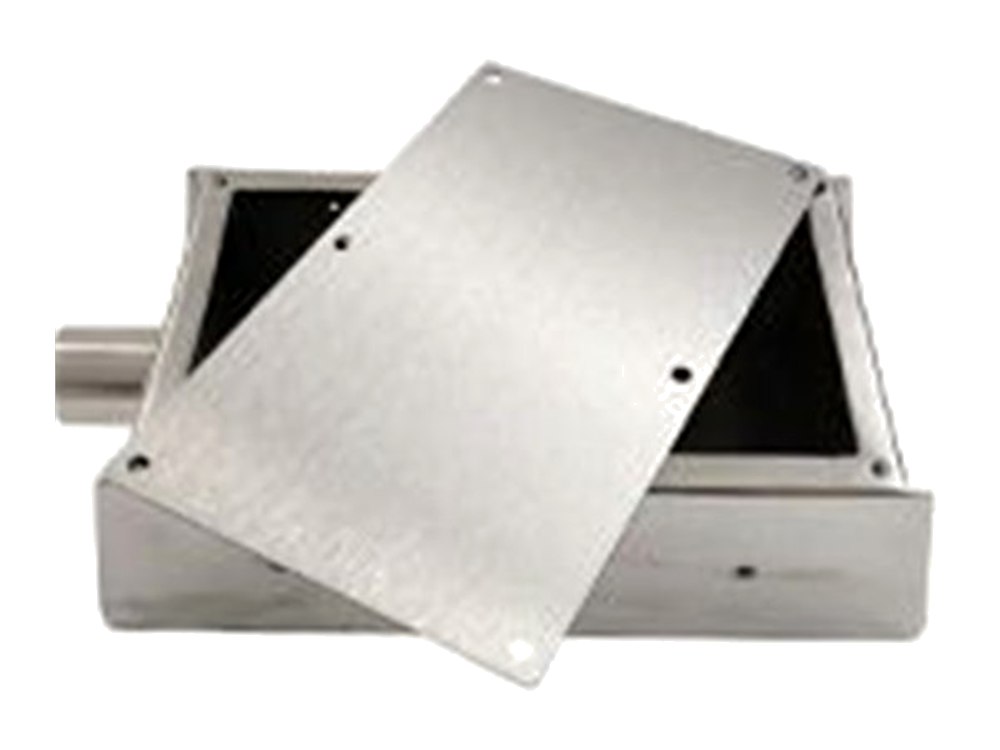

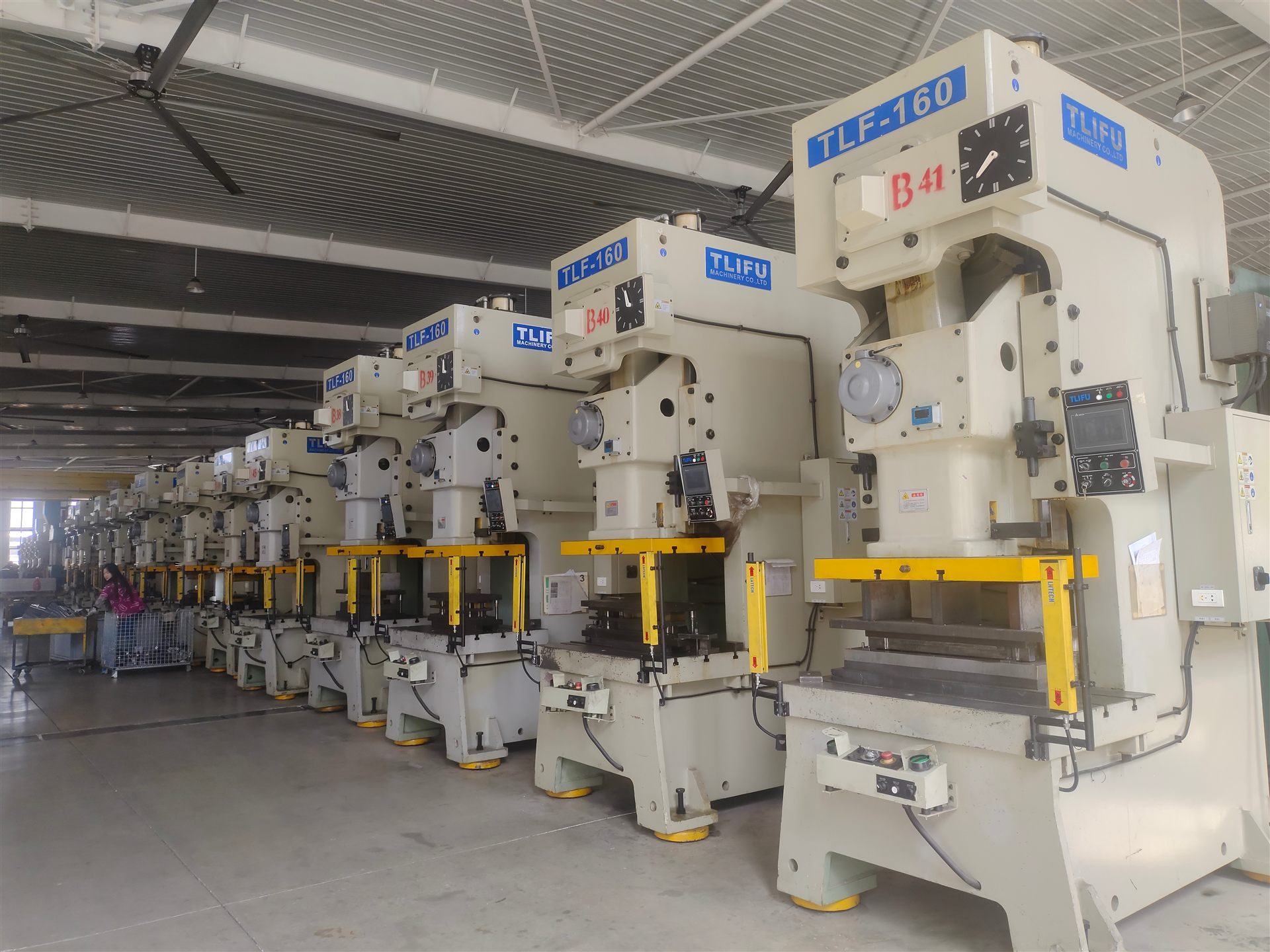
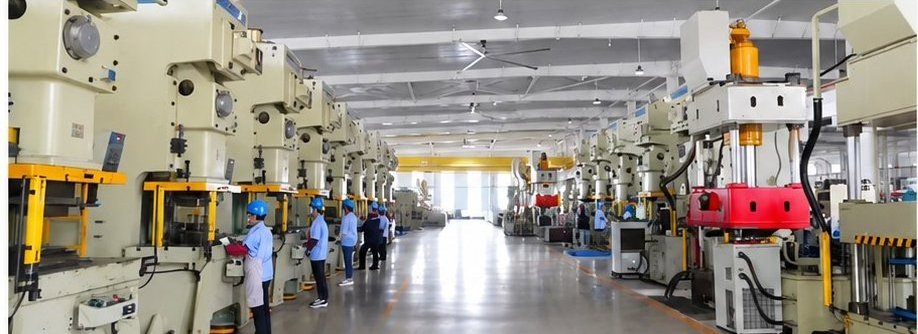
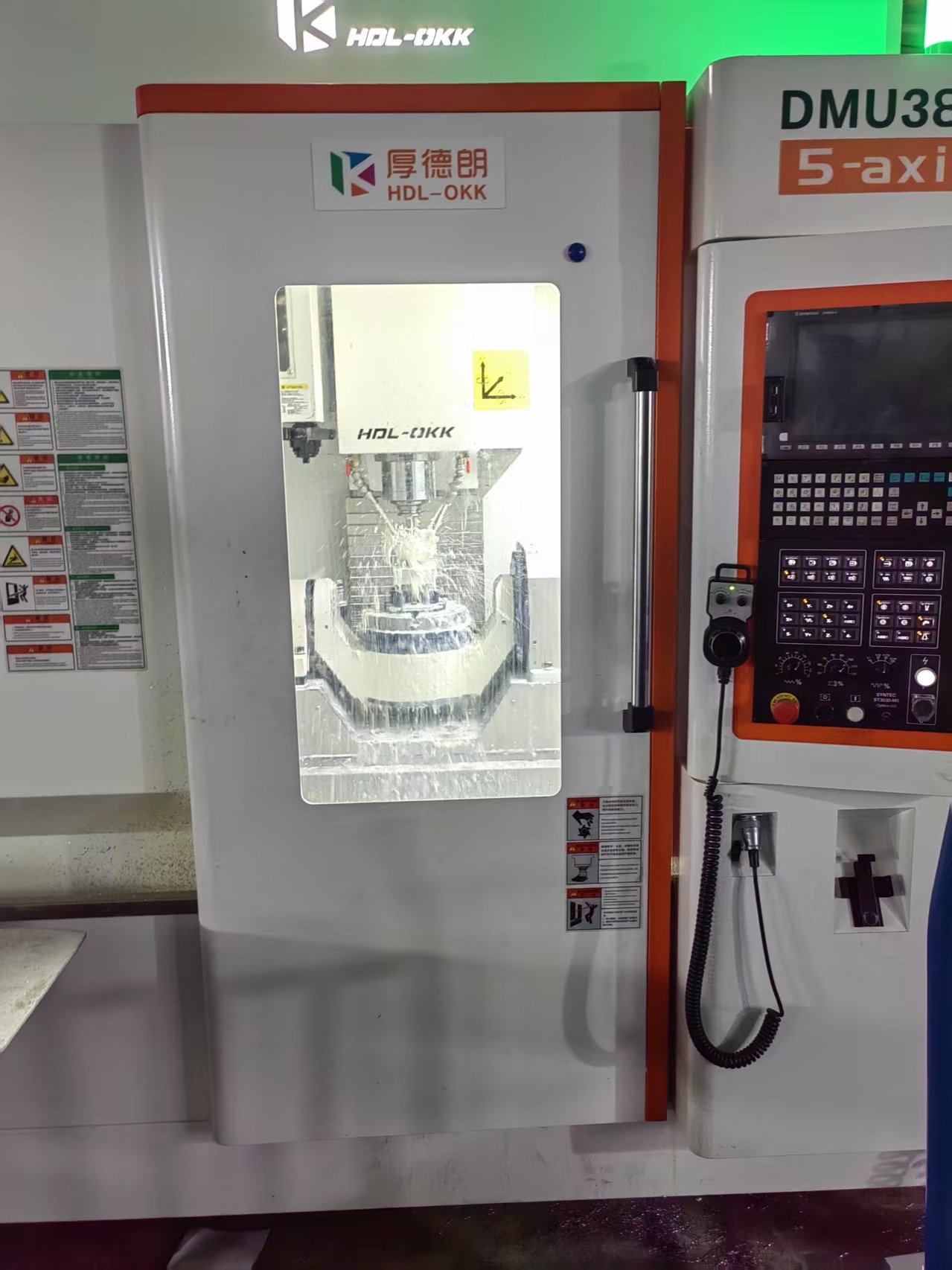
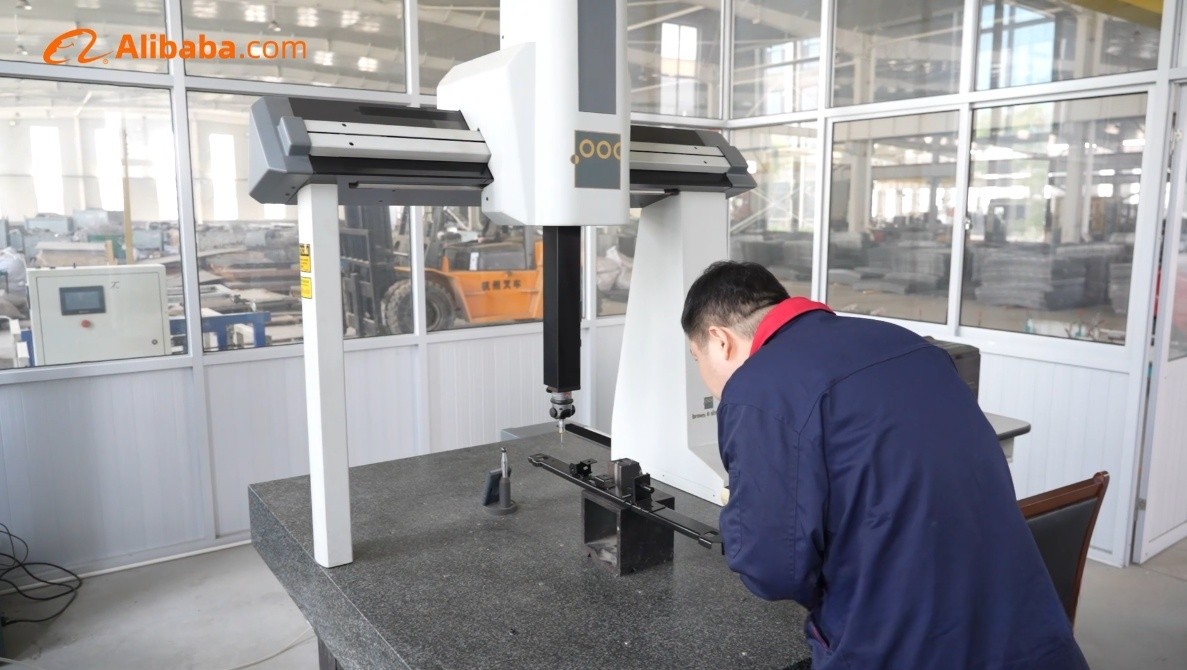
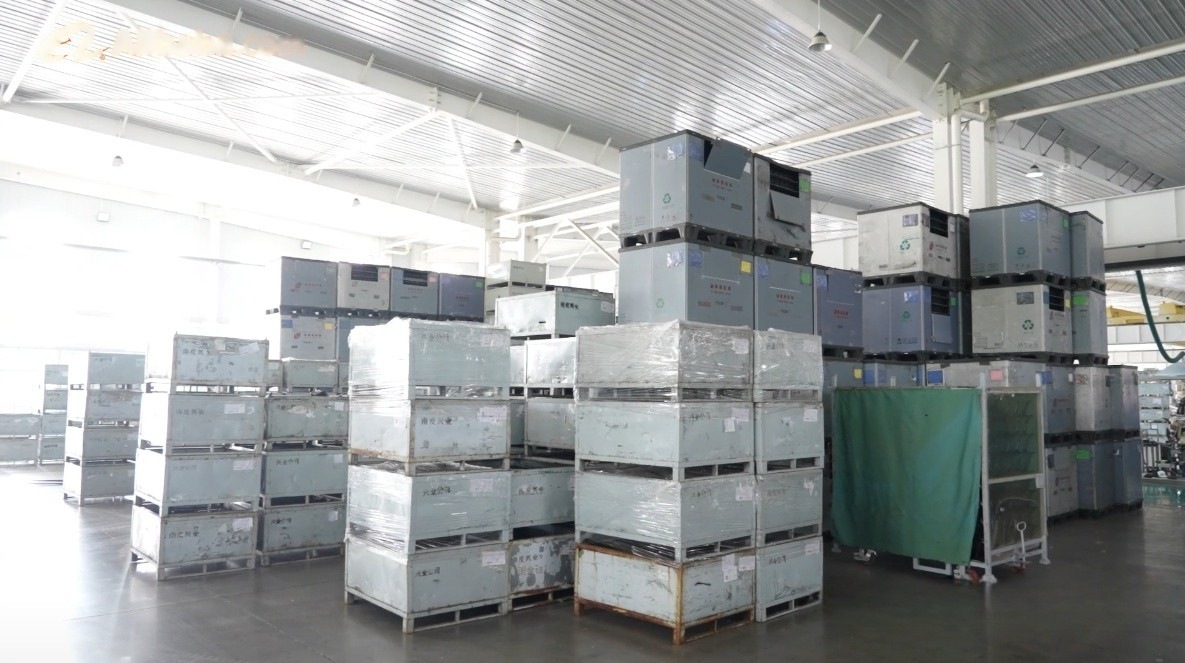
Include material, thickness, quantity, critical dimensions, finish and target date. We will review the manufacturing route before quoting.
Fiber laser cutting in China · up to 12,000 W · since 1998
A cutting bureau sends you a box of blanks and the rest is your problem. Here the laser is the first operation of a finished part — so the cell is programmed knowing which edges get bent, which get welded and which the customer will actually see.
Cutting is where a part starts, not where it ends. Because bending, welding, machining and finishing all happen in this building, the cut is planned around what the part has to become.
Five stages. The first one is where cost is actually decided, and it is the stage most cutting suppliers skip entirely.
An engineer opens your file and checks feature sizes, kerf allowance, tab placement and whether the flat pattern matches the folded part you actually want.
Parts are nested to use the sheet efficiently. On a repeat order we will tell you if a small quantity change lands a better yield.
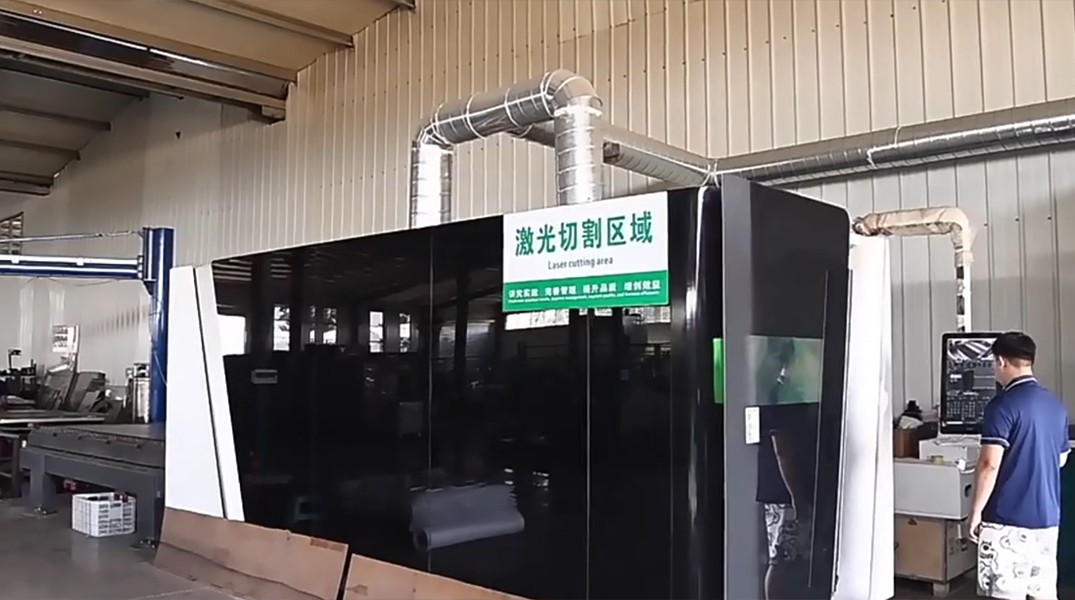
The enclosed fiber cell runs the programme, with parameters set for the grade and thickness rather than a generic recipe.
Cut edges are inspected and deburred where the drawing or the next operation requires it.
Blanks go to the press brake, weld bench or machining centre in the same building — no packing, shipping or second supplier.
These are the issues we find most often when a DXF arrives. All of them are cheap to fix in the file and expensive to discover on the machine.
A laser needs to pierce before it cuts. As a working rule, a hole smaller than the material thickness becomes difficult to cut cleanly — the pierce and the cut interfere, leaving a rough or tapered edge. On thicker plate the practical minimum grows. Where your design needs a small hole in thick material we will suggest drilling it instead, which is usually both cleaner and cheaper.
A laser beam has a finite spot, so an internal corner always carries a small radius. Specifying a perfectly sharp internal corner either cannot be met or forces a secondary operation. Adding a small radius or a corner relief in the file costs nothing and removes the ambiguity.
The beam removes material. On two parts designed to slot together, the cut width can turn an intended interference fit into a loose one. We check mating features and adjust for kerf, but if you have already compensated in the file, tell us — otherwise it gets compensated twice.
We can develop the flat ourselves and often prefer to, because the K-factor should match our tooling. But when a customer sends both a model and a DXF that disagree, we have to stop and ask which is authoritative. Sending the 3D model alone is cleaner than sending a flat pattern developed against someone else's press brake.
Cutting leaves a slight taper and a dross side. On a bracket hidden inside an assembly this is irrelevant; on a visible panel it is the difference between acceptable and rejected. If a face is cosmetic, mark it — we will orient and finish accordingly rather than guessing.
This review comes with the quotation at no charge. Fixing a feature in a DXF takes minutes; discovering it after a sheet has been cut costs material, machine time and a week.
Fiber laser cutting is the right first choice for most sheet metal work because it delivers a narrow kerf, a clean edge and ±0.05 mm profile accuracy with no mechanical tooling and almost no set-up cost between parts. Plasma cuts thicker plate faster but with a wider kerf and a heat-affected edge that needs dressing; waterjet leaves no heat at all but runs slower and costs more per part. For production thicknesses of 0.3–6.0 mm, and carbon steel laser cutting up to 25 mm, fiber laser is usually the cheapest route to an accurate blank — which is why it leads our cutting capability and feeds every downstream process on the floor.
Three things decide whether a laser-cut edge is acceptable: kerf width (the material removed by the beam — planned into the DXF so finished dimensions are correct), edge taper (slightly wider at the top than the bottom of the cut), and dross (resolidified material on the underside). On a hidden bracket none of this matters; on a visible panel it is the difference between pass and reject. If a face is cosmetic, mark it on the drawing and we orient the part, tune the cutting parameters and add the necessary finishing so the visible edge meets your expectation rather than surprising you.
The single biggest cost driver in laser cutting is material utilisation: how efficiently the parts nest on a sheet. Our quoting software optimises nesting across the whole sheet, and because cutting and downstream forming, welding and finishing run in the same plant, a part can go from DXF to finished fabricated component without leaving our control. For buyers sending drawings in DXF or STEP, we review geometry, edge requirements and downstream forming together before quoting, and return the price within 3 business hours — with the nesting yield and any scrap implication made visible rather than hidden in the number.
Send a DXF or STEP file and we will confirm what is achievable on your specific material and thickness. Where a feature is too small to cut cleanly, we will tell you at quotation rather than after the sheet is scrapped.
| Laser type | Enclosed fiber laser cell | Up to 12,000 W |
| Carbon steel | Up to 25 mm | Thickness affects edge quality |
| Stainless & aluminium | Reviewed per grade and thickness | Reflective grades assessed case by case |
| Profile tolerance | ±0.05 mm | Material and thickness dependent |
| Accepted files | DXF, DWG, STEP, PDF | Flat pattern or 3D model |
| Downstream in-house | Bending, welding, machining, finishing | Same work order |
| Production thickness | 0.3 – 6.0 mm typical for fabricated parts | Heavier sections cut for structural work |
| Quality system | ISO 9001:2015 | Registration 34025Q30296R0S |
Up to 25 mm in carbon steel with our 12,000 W cell. Stainless and aluminium capacity is lower and depends on the grade, because both reflect and conduct heat differently — we confirm against your specific material rather than quoting a single headline number. Most fabricated parts we produce sit in the 0.3 to 6.0 mm range.
DXF, DWG, STEP and PDF. If the part will be bent, send the 3D model rather than only a flat pattern — we will develop the flat using the K-factor for our own tooling, which avoids the mismatch that occurs when a pattern was developed against a different press brake.
±0.05 mm on profile, varying with material and thickness. Thin gauges hold tighter than heavy plate, where heat input has more effect. If a particular dimension is critical to assembly, mark it and we will confirm what is realistic on that feature specifically.
As a working rule the hole diameter should be at least equal to the material thickness, and the practical minimum grows on heavier plate because the pierce becomes harder to control. Below that, drilling gives a cleaner and usually cheaper result. Send the file and we will tell you which features need a different method.
Programming and nesting are part of the quoted price, not a line item added later. On repeat orders we will also tell you if adjusting the quantity slightly gives a materially better sheet yield.
Yes — that is the normal route here rather than an add-on. Bending, welding, machining and finishing all happen in the same building under one work order, so you receive a finished part rather than a box of blanks.
MOQ starts at 1 piece for production parts, and single pieces can be cut for prototypes and samples. Because there is no tooling, laser cutting is the cheapest way to prove a design before committing to a stamping die.
ISO 9001:2015, registration 34025Q30296R0S, which you are welcome to verify independently. If your programme is governed by an additional standard, name it in your enquiry and we will confirm in writing what we can meet before you place an order.
XCWY runs a 12,000W enclosed fiber laser for cutting sheet metal blanks, profiles and cut-outs, producing parts for fabrication and stamping programmes. Cutting is followed by CNC bending, welding, finishing and 5-axis machining as required, so cut parts can be delivered as blanks or as completed assemblies under an ISO 9001:2015 quality system.
| Item | Detail |
|---|---|
| Laser source | 12,000W fiber laser in an enclosed cutting cell |
| Typical parts | Flat blanks, profiles, brackets, panels and cut-outs |
| Follow-on processes | CNC bending, welding, machining, finishing, assembly |
| Materials | Stainless steel, carbon steel, galvanised steel, aluminium, copper, brass |
| Edge condition | Cut edge and heat-affected zone vary with material and thickness |
| Inspection | Dimensional checks against the released drawing revision |
A 12,000W fiber laser in an enclosed cutting cell, used for flat blanks, profiles and cut-outs.
Yes. CNC bending, welding, machining, finishing and assembly are available so laser-cut parts can be supplied as blanks or as finished assemblies.
Stainless steel, carbon steel, galvanised steel, aluminium, copper and brass, with parameters selected per material and thickness.
Dimensional checks are performed against the released drawing revision, and edge condition is reviewed against the stated requirement.
A DXF or DWG flat pattern with revision level, plus material, thickness, quantity and tolerance requirements.