Custom Electrical Enclosures and Cabinets
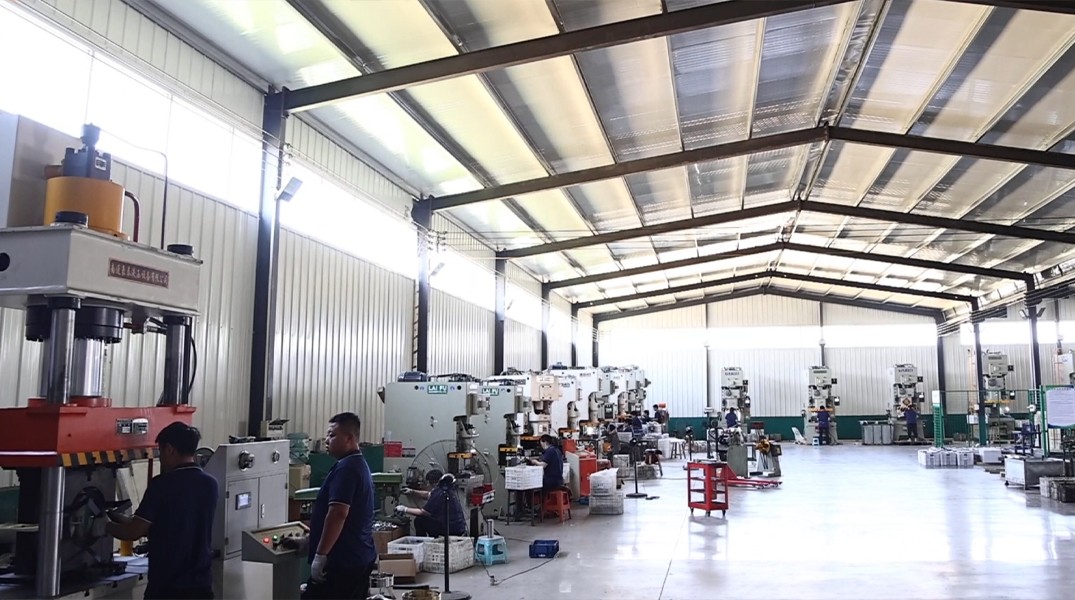
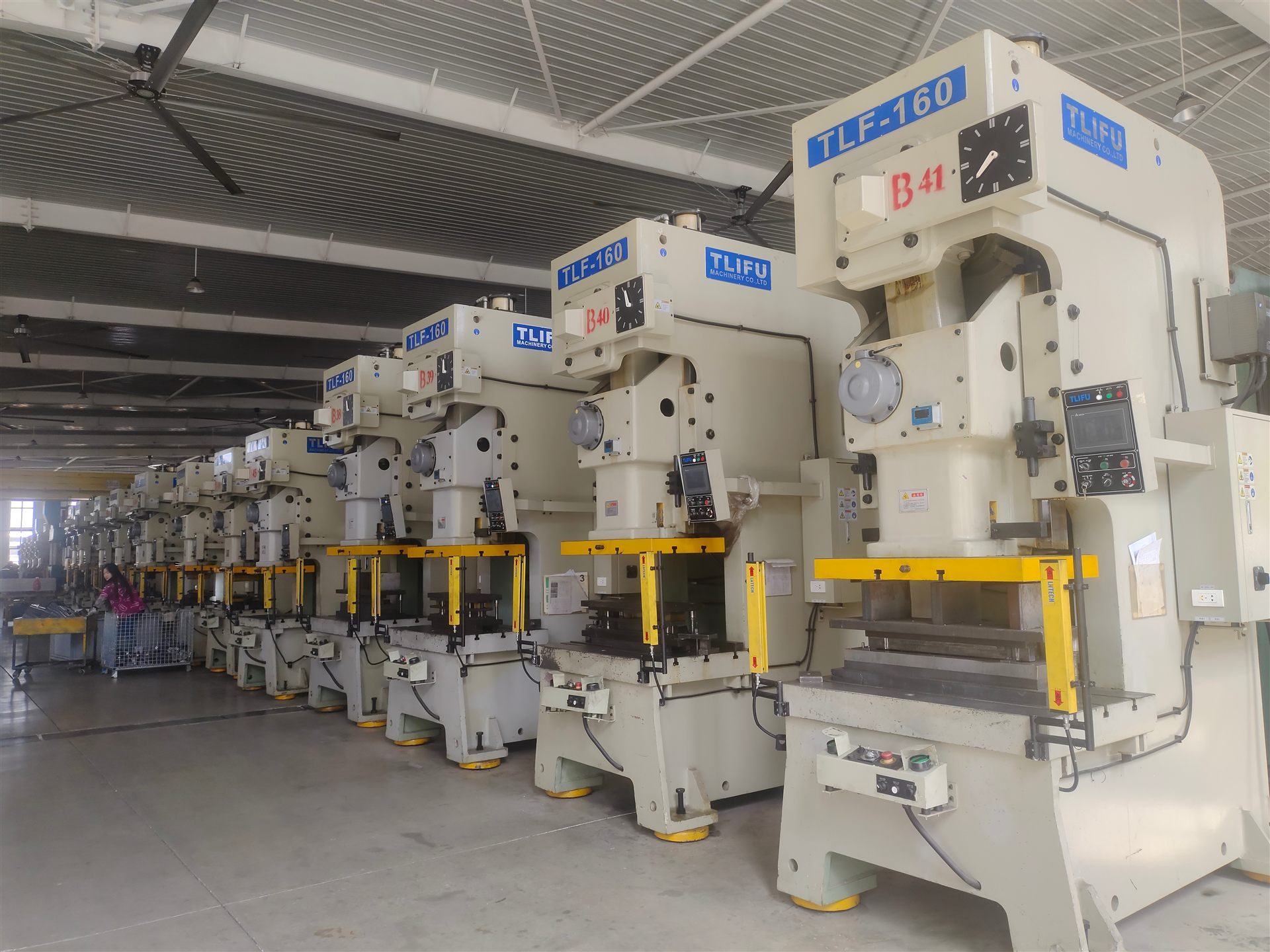
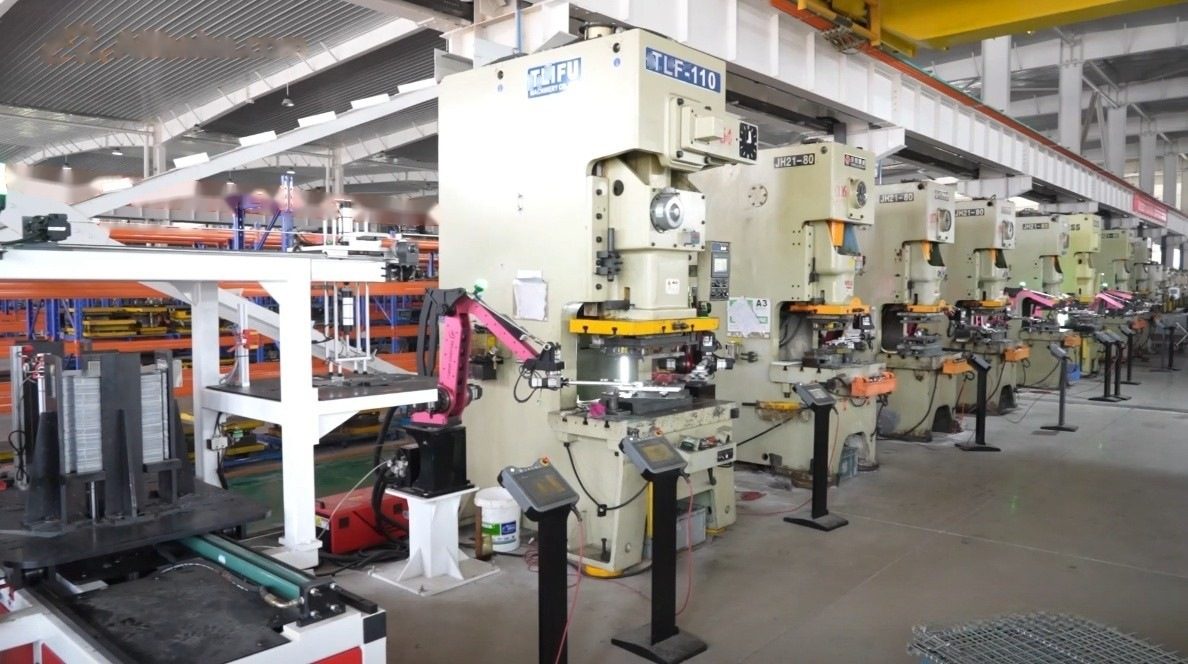
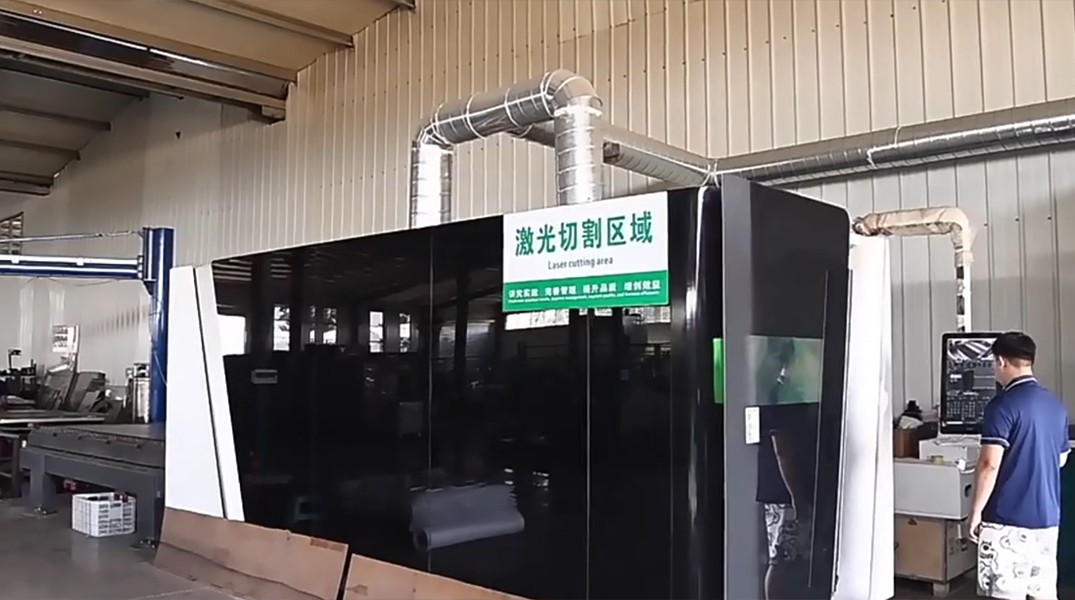
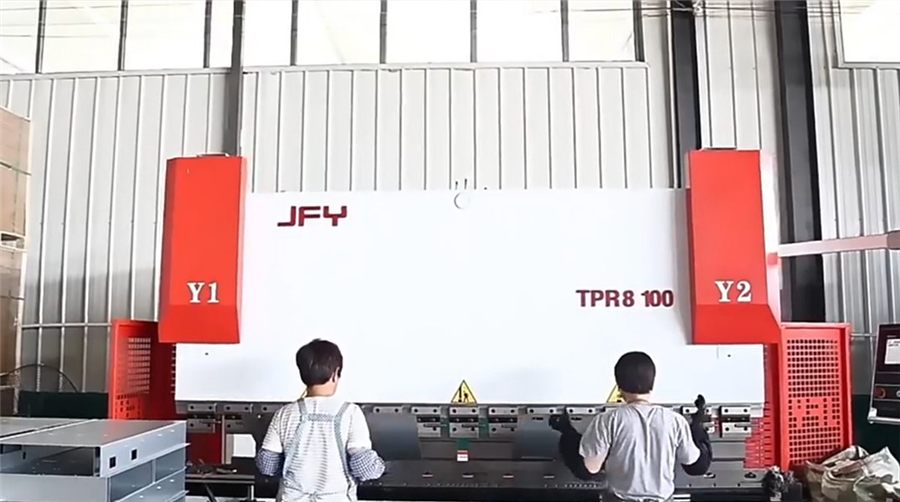
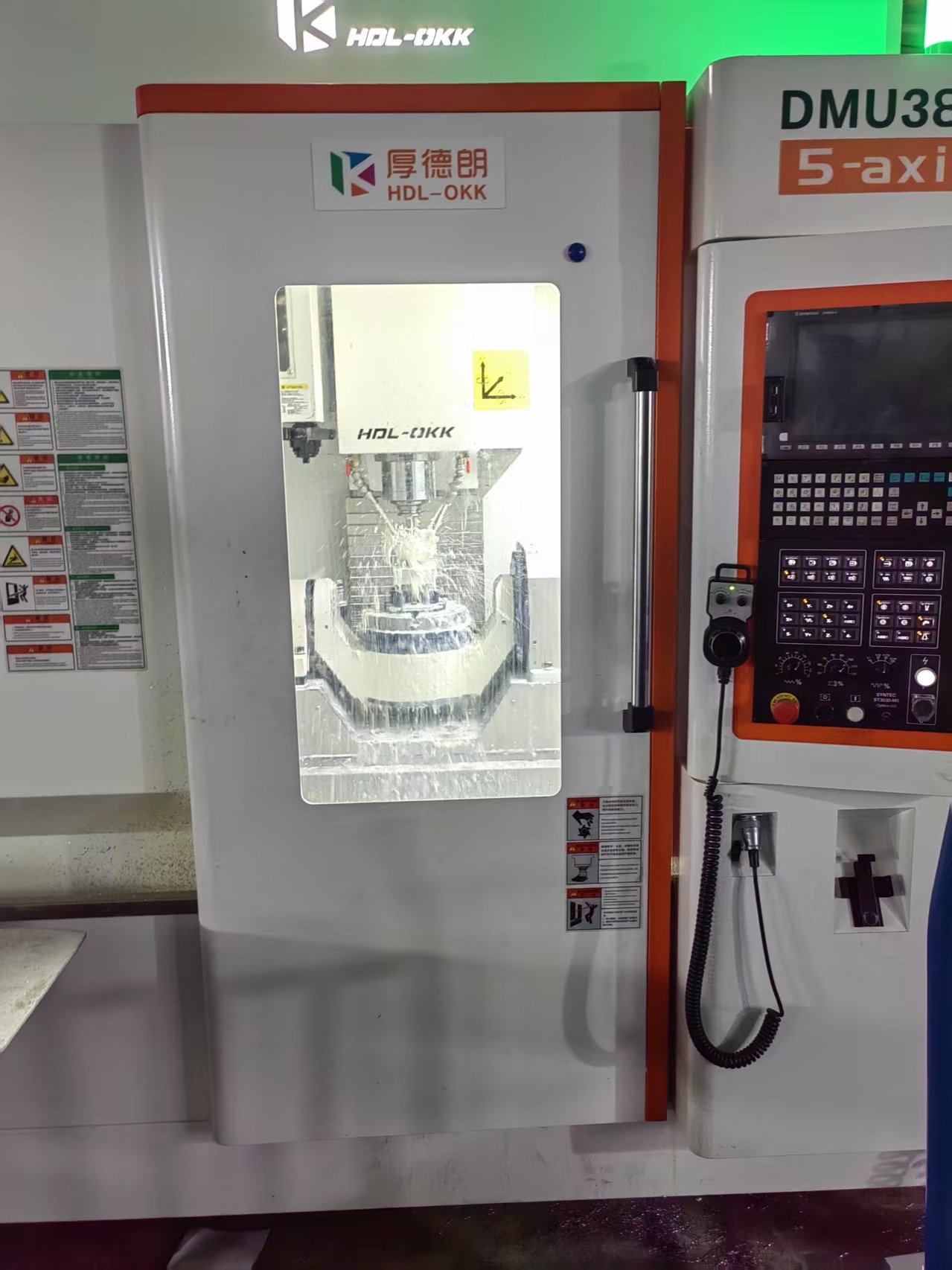
XCWY supports buyers developing custom parts with drawing-based metal manufacturing and practical engineering review. Founded in 1998, the factory operates in a 15,000 m² facility with six production lines and 78 staff. Available processes include 25–400T pressing, 12kW laser cutting, precision press-brake forming, five-axis machining, laser/TIG/MIG/spot welding, and PEM insertion. The 12kW laser cuts carbon steel to 25 mm, stainless steel to 20 mm, aluminum to 12 mm, and copper to 6 mm. A 3,200 mm press brake works to ±0.5° angle capability, while five-axis machining reaches ±0.005 mm under suitable conditions. CMM inspection supports dimensional verification. ISO 9001:2015 registration 34025Q30296R0S covers the quality system. MOQ starts at one piece, NDA handling is available, and complete RFQs are targeted for quotation within three business hours. This page explains scope, choices, risks, and the information needed for a defensible manufacturing route.
Request a Drawing Review
Attach the drawing, revision, material, quantity, critical tolerances, finish and target date. The inquiry is saved in the site database and emailed to the XCWY team.
Design Scope
A useful engineering program begins by defining the real component family rather than requesting a generic metal part. Typical scope includes wall-mounted boxes, control cabinets, terminal housings, removable gland plates, hinged doors, rain hoods, internal mounting panels, cable-entry covers, and equipment pedestals. Each item carries different load paths, access needs, appearance zones, and production volumes, so XCWY reviews the assembly context before proposing a process. Important interfaces commonly include door gaps, gasket channels, hinge axes, latch cutouts, grounding studs, DIN-rail points, cable glands, vent patterns, and panel mounting grids. These features should be dimensioned from stable datums instead of accumulated edge chains. A 3D model helps visualize the assembly, but a revision-controlled 2D drawing remains essential for tolerances, material, finish, burr direction, and inspection notes. Early DFM examines bend relief, inside radii, hole-to-edge distance, tool approach, weld access, hardware installation, and realistic measurement points. Prototype quantities may favor laser cutting and brake forming, while repeat demand can justify hard tooling or progressive operations. Machining is reserved for features that truly need it. XCWY does not assume service loads, environmental class, or legal compliance on the buyer’s behalf. Buyers should provide mating-part data, critical load cases, restricted substances, and any governing standards. That shared definition keeps design responsibility visible, reduces quotation ambiguity, and prevents a low-cost process choice from creating expensive assembly problems later.
Materials and Surface Decisions
Material selection should connect mechanical function, fabrication behavior, corrosion exposure, appearance, and supply condition. XCWY can process CRS or Q235 for coated indoor cabinets, galvanized steel for added corrosion defense, SS304 or SS316L for wet service, and AL5052 where lower mass and corrosion behavior are priorities. A grade name alone is not enough: thickness, temper or hardness, applicable standard, grain limits, and certificate expectations should appear in the RFQ. Substitution is not made silently because strength, elongation, conductivity, bend response, weldability, and coating adhesion can change. Surface choices include powder coating for carbon-steel cabinets, passivation or brushing for stainless, anodizing for aluminum, plus deliberate masking at bonding points, threads, seals, and nameplate zones. The drawing should state the process, color or appearance, thickness or class where relevant, masking locations, and cosmetic acceptance zones. Threads, PEM interfaces, grounding points, gasket lands, press fits, and weld areas may require protection from finish buildup. Mixed metals also need review for galvanic risk, especially where moisture can remain. Forming direction and visible grain matter for brushed or polished surfaces, while rack marks and contact points must be assigned to noncritical areas when possible. Finish approval can use a customer standard, measurable specification, or signed sample rather than subjective words such as “good” or “smooth.” Material certificates and finish certificates can be included when requested and defined. These decisions allow sourcing, tooling, forming, welding, and inspection teams to work from the same technical baseline.
Manufacturing Route and Capacity
XCWY selects the manufacturing route from geometry, volume, tolerance, material, and finish rather than forcing every design through one machine. Six production lines combine presses from 25 to 400T with a 12kW laser, a 3,200 mm press brake, five-axis machining, welding, hardware insertion, and inspection. The laser has stated cutting limits of 25 mm carbon steel, 20 mm stainless steel, 12 mm aluminum, and 6 mm copper; actual edge quality and speed still depend on grade, thickness, geometry, gas, and acceptance criteria. The brake provides ±0.5° angle capability under appropriate setup, while five-axis machining can reach ±0.005 mm where part shape, fixturing, material stability, and measurement method support it. Prototype blanks can validate fit before tooling investment. Higher volumes may move to compound, transfer, or progressive stamping after demand and tool economics are confirmed. Laser, TIG, MIG, and spot welding are available, with sequence and fixturing planned to limit distortion. PEM insertion can consolidate assembly, but hole preparation, sheet hardness, edge distance, and push-out needs must be specified. Process transitions are documented so that cut parts, formed parts, weldments, inserted hardware, and finished goods remain linked to the correct revision. The resulting route aims for repeatability without claiming that every advertised machine capability applies to every feature.
Quality Planning and Failure Control
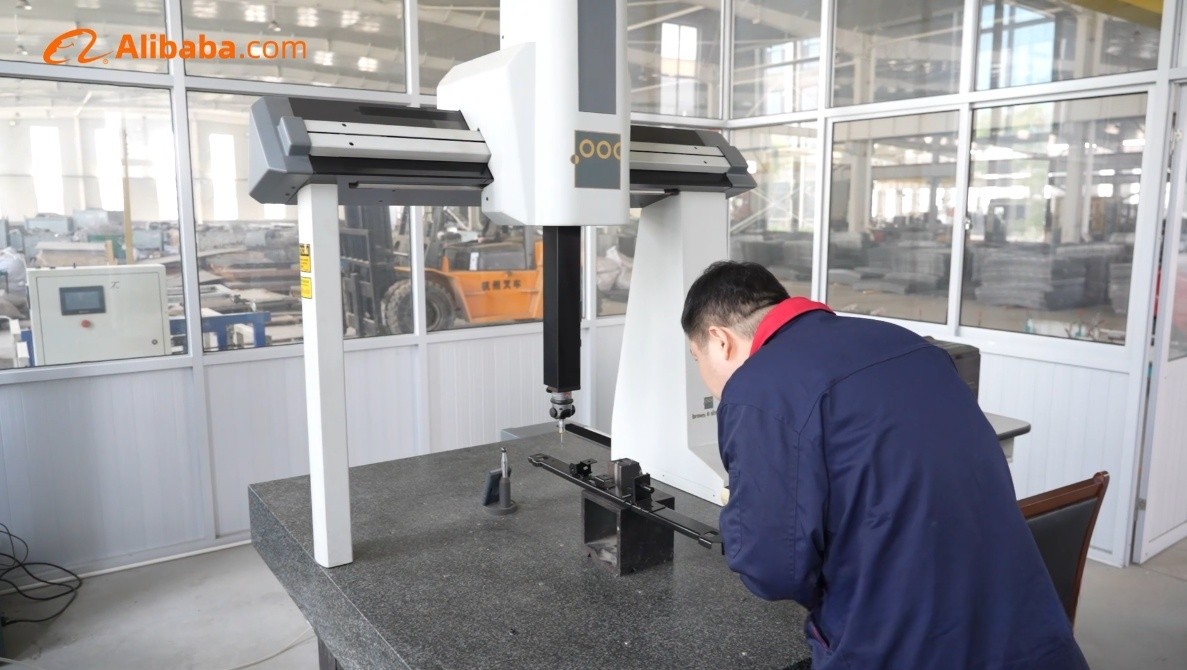
Quality planning starts with likely failures, not with a final inspection checklist. Relevant concerns include water paths at seams, door twist, gasket over-compression, paint on grounding points, weak hinge areas, sharp cable-entry edges, and inaccessible mounting hardware. XCWY reviews which characteristics prevent these outcomes, how those characteristics are produced, and which method can verify them. CMM inspection is available for suitable dimensional features, while dedicated gauges, calibrated hand tools, visual standards, coating tests, fit checks, and functional fixtures may be more appropriate elsewhere. The control plan should identify critical dimensions, sampling level, inspection stage, measurement condition, and reaction path. Welded or formed assemblies need datums that remain stable after processing; flexible edges are poor inspection references. Cosmetic requirements benefit from defined viewing distance, lighting, allowed defect size, and zone classification. Material identity, hardware type, finish batch, and revision status can be captured according to the agreed traceability level. First-article evidence is useful before volume release, and PPAP Level 3 is available when requested, particularly when the customer supplies the required format and submission expectations. XCWY is ISO 9001:2015 registered under 34025Q30296R0S, but it is not IATF, ISO 13485, AS9100, or UL certified. Any sector-specific approval or product certification remains a separately defined customer requirement and must not be inferred from the quality-system certificate.
RFQ, Documentation, and Commercial Handoff
A complete custom parts RFQ shortens review time and produces a more comparable quotation. The preferred package contains released enclosure drawings, gasket and hardware schedule, weld-symbol interpretation, finish specification, grounding details, inspection criteria, packaging method, and any compliance evidence supplied by the buyer. Include target quantity, prototype and annual demand, delivery location, desired schedule, and whether tooling is customer-owned. Native CAD plus a readable PDF reduces interpretation risk; conflicting dimensions or revisions should be resolved before release. XCWY targets a quotation within three business hours after receiving complete information, although complex tooling, unusual testing, or incomplete specifications may require clarification before a firm offer. MOQ begins at one piece, enabling fit checks or engineering samples, but one-piece economics should not be projected onto production demand. NDA support is available for confidential custom parts files. Change control matters after award: material, tolerance, finish, hardware, packaging, or source changes should follow an agreed approval path. PPAP Level 3 can be prepared when requested, but its contents, sample quantity, timing, and customer templates belong in the order scope. Packaging should address part nesting, moisture, edge protection, cosmetic separation, and label traceability rather than being treated as an afterthought. XCWY will not invent customer names, approvals, test reports, or end-product certifications. A disciplined handoff aligns the released design, commercial assumptions, inspection evidence, and shipment method before production begins.
Specifications and Scope
| Quality system | ISO 9001:2015 registration 34025Q30296R0S |
|---|---|
| Operating history | manufacturing support since 1998 |
| Factory scale | capacity within a 15,000 m² facility, six lines, and 78 staff |
| Pressing | press range from 25T through 400T |
| Laser cutting | 12kW limits: carbon steel 25 mm, stainless 20 mm, aluminum 12 mm, copper 6 mm |
| Press brake | forming on a 3,200 mm brake with ±0.5° angle capability under suitable conditions |
| Five-axis machining | precision capability to ±0.005 mm when geometry, setup, and inspection support it |
| Joining | laser, TIG, MIG, and spot welding, plus PEM insertion |
| Inspection | dimensional verification supported by CMM inspection |
Typical Applications
Industrial Control Cabinets
XCWY reviews this application against the released drawing, material, quantity, interfaces, finish and inspection requirements before proposing a manufacturing route.
Junction Boxes
XCWY reviews this application against the released drawing, material, quantity, interfaces, finish and inspection requirements before proposing a manufacturing route.
Automation Panels
XCWY reviews this application against the released drawing, material, quantity, interfaces, finish and inspection requirements before proposing a manufacturing route.
Power Distribution Housings
XCWY reviews this application against the released drawing, material, quantity, interfaces, finish and inspection requirements before proposing a manufacturing route.
Instrument Enclosures
XCWY reviews this application against the released drawing, material, quantity, interfaces, finish and inspection requirements before proposing a manufacturing route.
Telecom Equipment Boxes
XCWY reviews this application against the released drawing, material, quantity, interfaces, finish and inspection requirements before proposing a manufacturing route.
Machine Electrical Pedestals
XCWY reviews this application against the released drawing, material, quantity, interfaces, finish and inspection requirements before proposing a manufacturing route.
Custom Terminal Cabinets
XCWY reviews this application against the released drawing, material, quantity, interfaces, finish and inspection requirements before proposing a manufacturing route.
Ingress Protection and Enclosure Certification: What to Fix Before Tooling
Three different rating systems appear on enclosure drawings, and buyers frequently treat them as interchangeable. They are not. IEC 60529 defines the IP Code, which is an ingress test result only. NEMA 250 defines an enclosure type and, in the same document, a set of minimum design requirements. UL 50 and UL 50E also define design requirements, and add bonding and grounding provisions that NEMA 250 does not address. A quotation prepared against the wrong system produces an enclosure that cannot be certified, and certification rather than fabrication is usually the critical path on an enclosure programme.
The IP Code answers one question only: ingress
The IP Code is a two-character combination. The first character covers access to hazardous parts and solid foreign objects; the second covers liquids. The first character moves in discrete steps, so protection does not improve gradually between adjacent ratings.
| IP first character | Object protected against | Practical meaning on an enclosure |
|---|---|---|
| IP 0X | No protection | Open construction; no gasket requirement |
| IP 1X | Greater than 50 mm | Back of hand and similar large surfaces |
| IP 2X | Greater than 12.5 mm | Fingers and comparable small objects |
| IP 3X | Greater than 2.5 mm | Thick wires and tools |
| IP 4X | Greater than 1 mm | Screws, nails and wires |
| IP 5X | Dust protected | Some dust may enter, but it cannot interfere with operation |
| IP 6X | Dust tight | No ingress of dust at all |
Note what the IP Code does not contain: no corrosion resistance, no icing behaviour, no mechanical strength and no flammability. IP66 and NEMA 4X are quoted as equivalents in many catalogues, yet NEMA 4X adds a corrosion requirement that IP66 never tests. Where the installed environment combines washdown with chemical exposure, an IP66-only specification is incomplete on its face.
NEMA 250 types carry design requirements, not just test levels
NEMA 250 assigns a type number and states what each type protects against. The protection is expressed as solids on one hand and liquids on the other, and the two columns do not scale together.
| NEMA type | Solids | Liquids |
|---|---|---|
| Type 1 | Falling dirt | No protection |
| Type 2 | Falling dirt | Dripping and light splashing water |
| Type 5 | Falling dirt, settling airborne dust, fibres, flyings and lint | Dripping and light splashing water |
| Type 12 | Falling dirt, circulating dust, fibres, flyings and lint | Dripping and light splashing water, plus seepage and light splashing of oil and non-corrosive coolants |
| Type 13 | Falling dirt, circulating dust, fibres, flyings and lint | Dripping and light splashing water, plus seepage, light splashing and spraying of oil and non-corrosive coolants |
| Type 3 | Windblown dust and falling dirt | Water from sleet, snow and windblown rain |
| Type 3R | Falling dirt | Water from falling rain, sleet and snow |
| Type 4 | Windblown dust and falling dirt | Water directed from a hose, and water from rain, sleet, snow and splashing |
| Type 4X | Windblown dust and falling dirt | Hose-directed and rain, sleet, snow and splashing water, with increased corrosion protection |
| Type 6 | Falling dirt | Hose-directed water and temporary submersion at a limited depth |
| Type 6P | Falling dirt | Hose-directed water and prolonged submersion at a limited depth |
Five of the eleven types listed above are indoor use only: Types 1, 2, 5, 12 and 13. Measured against the same eleven-type list, that is 45% of the range carrying an indoor-only restriction, while the remaining types may be installed indoors or outdoors. This is why the type number and the exposure location belong on the drawing, and why the word waterproof alone carries no engineering content.
Corrosion claims need a cycle and an hour count, not an adjective
Corrosion resistance is established by an accelerated test with a defined cycle. ASTM B117, the salt spray standard cited most often in enclosure specifications, produces a continuous salt fog from a 5% sodium chloride solution. Its useful output is the time to first defect in hours under that fixed cycle, which is a repeatable pass or fail signal rather than a service-life forecast. NEMA 4X calls for increased corrosion protection, and the evidence a buyer should ask for is a salt spray result quoted at a defined hour count. XCWY’s own finishing programme is tested with salt spray from 500 to more than 1,000 hours depending on the coating system, and that figure describes the complete finish system rather than the steel beneath it.
Two cautions are worth stating plainly. Salt spray is an accelerated test and cannot be converted directly into years of installed service. And a drawing that specifies powder coat without thickness, pretreatment and test duration has specified nothing that a laboratory can verify.
Who establishes the rating, and where the fabricator’s scope ends
This is where enclosure programmes are most often misread. A NEMA type or a UL listing is established by testing at a recognised laboratory against the assembly as built, including gaskets, hardware, cable entries, windows and the finish system. A metal fabricator supplies the shell geometry and the enclosure hardware to the released drawing; a fabricator cannot self-declare a NEMA 4X rating or a UL listing. XCWY states this boundary explicitly rather than implying otherwise. What XCWY does control is the fabricated geometry, the seam construction, the gasket lands, the finish system and the dimensional evidence, which are the inputs any laboratory test depends on.
What to fix on the drawing before a quotation is issued
- The target rating and the governing standard, written as IEC 60529 IP code, NEMA 250 type, or both, with the indoor or outdoor location stated.
- Gasket material, hardness and compression, plus the gasket land width and surface finish the drawing requires.
- Seam and joint construction, including continuous weld where a liquid-tight claim depends on it, and which seams are ground flush.
- Cable entry provisions: gland plates, knockout sizes, hole positions and whether entries are gasketed.
- The complete finish system in order, covering pretreatment, coating type, nominal thickness and the salt spray hour count required.
- Bonding and grounding provisions where UL 50 or UL 50E applies, since NEMA 250 does not cover them.
- Materials of construction, sheet thickness and the standard the tolerances follow.
- Marking and labelling, including where the rating plate is fixed and whether it must survive the same exposure as the enclosure.
Bringing these items together at the quotation stage keeps certification on the critical path instead of discovering it after tooling. XCWY reviews the released drawing, the rating target and the finish system against our fabrication capability and states clearly which requirements we manufacture to and which are established later by third-party testing.
Rating definitions in this section follow the published NEMA enclosure type descriptions and an accredited laboratory overview of IEC 60529, NEMA 250 and UL 50 requirements: NEMA enclosure types (NEMA) and electrical enclosure ingress protection ratings overview (Keystone Compliance). The salt spray cycle described is ASTM B117, summarised at ASTM B117 salt spray testing (Q-Lab).
Risks Buyers Should Resolve Before Release
| Risk | Effect | Control |
|---|---|---|
| water paths at seams | Define a functional datum and verify the feature at the controlling process stage. | Define a functional datum and verify the feature at the controlling process stage. |
| door twist | Specify material condition and validate forming with samples before volume release. | Specify material condition and validate forming with samples before volume release. |
| gasket over-compression | Control weld or forming sequence with appropriate fixtures and an agreed inspection condition. | Control weld or forming sequence with appropriate fixtures and an agreed inspection condition. |
| paint on grounding points | State finish preparation, masking, thickness, and acceptance evidence on the drawing. | State finish preparation, masking, thickness, and acceptance evidence on the drawing. |
| weak hinge areas | Use revision-linked hardware identification plus incoming and in-process checks. | Use revision-linked hardware identification plus incoming and in-process checks. |
| sharp cable-entry edges | Remove or control burrs with direction, edge, and handling requirements. | Remove or control burrs with direction, edge, and handling requirements. |
Manufacturing Evidence — Electrical Enclosures
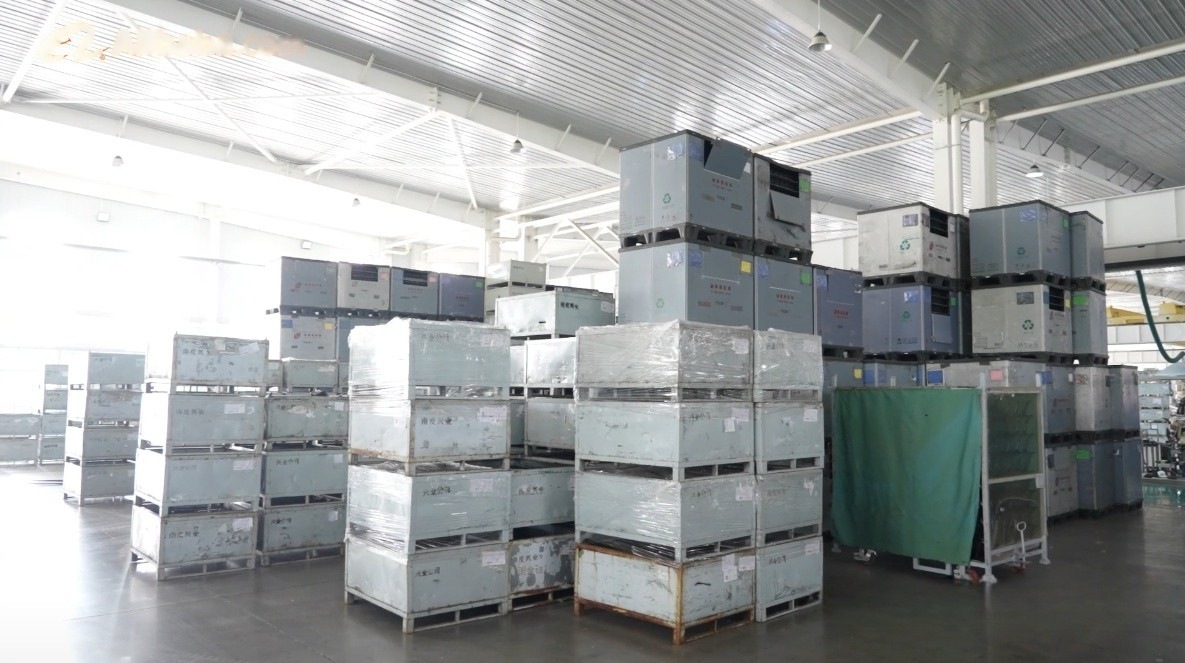
The images below come from the XCWY site asset library and show the plant, equipment, inspection areas and representative parts already published for Electrical Enclosures.

Frequently Asked Questions
What files are needed to quote custom parts?
Send the 2D drawing, 3D model when available, quantities, material, finish, tolerance notes, inspection expectations, packaging, and destination. Conflicting revisions should be resolved before a firm quotation.
Can XCWY make a single prototype part?
Yes. The MOQ starts at one piece. Prototype routing may use laser cutting, brake forming, machining, welding, or PEM insertion before dedicated tooling becomes economical.
How quickly can XCWY quote custom parts?
For a complete custom parts RFQ, XCWY targets a quotation within three business hours. Tooling studies, missing standards, unusual tests, or unclear acceptance criteria can extend review.
Which metals are available?
The material range includes CRS, Q235, galvanized steel, SS304, SS316, SS316L, AL5052, AL6061, C110, C260, and 65Mn. Final choice depends on function and released specifications.
Which finishes can be specified?
Available options include powder coating, zinc plating, anodizing, brushing, polishing, and passivation. Compatibility, masking, thickness, appearance, and test requirements should be defined.
Is PPAP available?
PPAP Level 3 is available when requested. Buyers should state templates, submission level, sample quantity, timing, control-plan expectations, and approval workflow in the RFQ.
Which certifications do not apply to custom parts?
XCWY holds ISO 9001:2015 registration 34025Q30296R0S for its quality system. The offer does not claim IATF, ISO 13485, AS9100, or UL certification.
Can XCWY sign an NDA?
Yes. NDA handling is available for confidential drawings, models, tooling data, forecasts, and inspection records before detailed technical review.
Continue the Engineering Review
Get a Manufacturing Review and Quote
Attach the drawing, revision, material, quantity, critical tolerances, finish and target date. The inquiry is saved in the site database and emailed to the XCWY team.