Metal Surface Finishing Guide: Powder Coating, Plating, Anodizing and More
The metal part you design is only half the story — the finish decides how it looks, how long it survives, and whether it passes the spec your customer will check. This guide explains the finishing options we apply in-house at our Nanpi plant, what each one is genuinely good for, and how to specify a finish so there is no ambiguity at quoting.
In short: powder coating is the workhorse for painted steel parts, zinc plating for cost-effective corrosion resistance, anodizing for aluminium, and passivation or brushing for stainless. The finish should be specified against the service environment — not copied from a similar part.
Finishing Options Compared
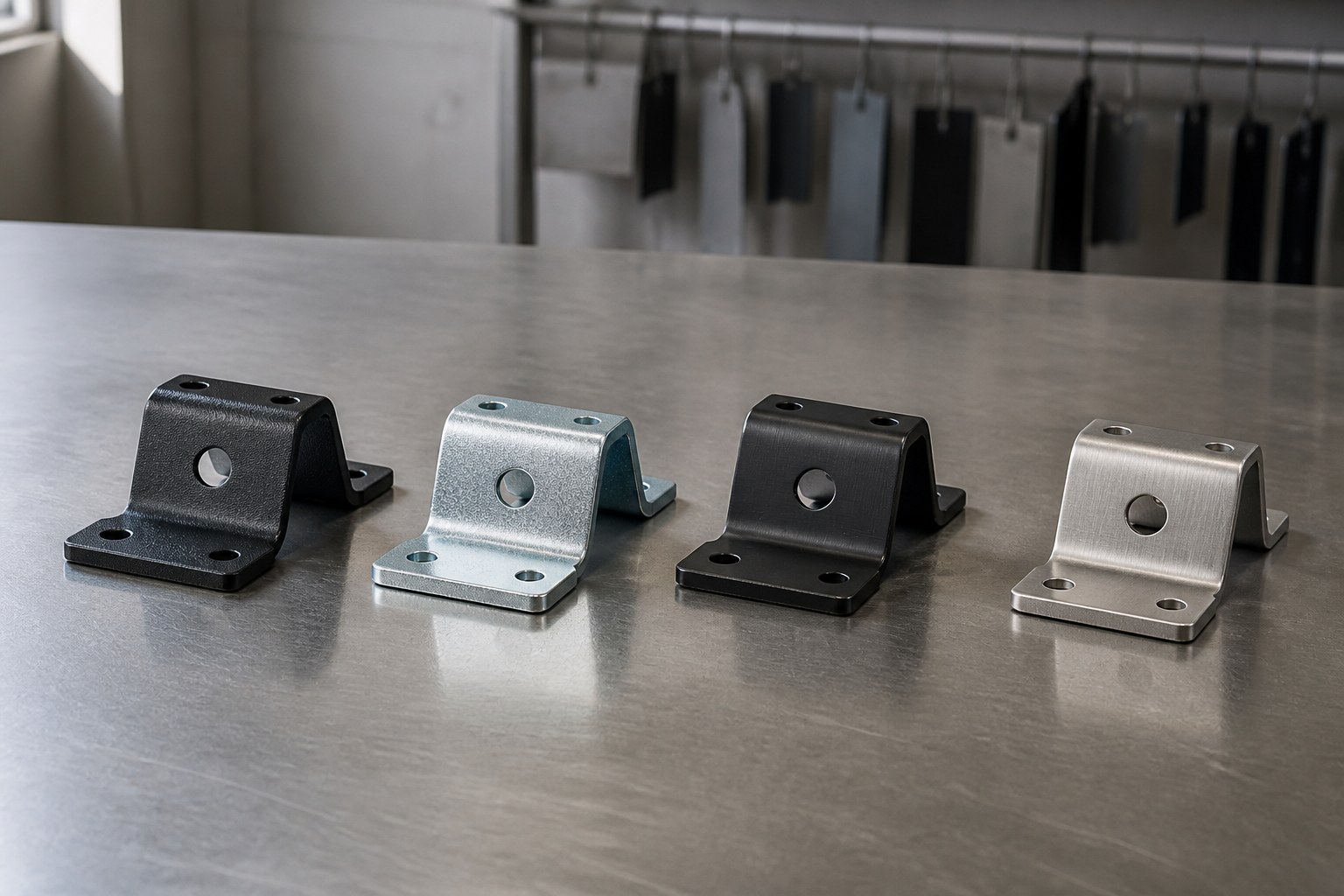
| Finish | Best for | Typical thickness | Watch out for |
|---|---|---|---|
| Powder coating | Indoor and outdoor painted steel; colour-matched to RAL | 60–120 µm | Masking needed for grounding pads and threads; thinner films on sharp edges |
| Zinc plating | Cost-effective corrosion resistance on fasteners and hardware | 5–15 µm | Limited outdoor life; specify clear, yellow or black chromate |
| Hot-dip galvanizing | Heavy structural parts for long outdoor life | 45–85 µm | Coordinate post-fabrication; size limits; weld touch-up required |
| Anodizing (aluminium) | Hard, scratch-resistant aluminium surfaces; dyed colours | 5–25 µm | Only on aluminium; dimensional growth on threaded holes |
| Brushing / polishing (stainless) | Hygienic and aesthetic stainless surfaces | 240–400 grit | Grit direction consistency; roughness should be specified |
| Passivation (stainless) | Restoring corrosion resistance after welding and grinding | Chemical film | Not a coating — it is the oxide layer restoration step |
| Sandblasting | Surface prep for coating; matte appearance | Profile 25–75 µm | Specify media and profile where adhesion matters |
Choosing the Right Finish
- Indoor painted steel → powder coating, RAL specified
- Outdoor steel → powder over galvanized base, or hot-dip galvanizing for structural parts
- Fasteners and hardware → zinc plating
- Aluminium parts → anodizing (clear or dyed) or powder coating
- Food or medical contact → stainless, brushed + passivated, no paint
- Coastal or marine → 316L stainless, passivated; or galvanized + heavy powder system
- Appearance-critical → specify grain direction on brushing, RAL and gloss level on coating
How We Apply Finishes at XCWY
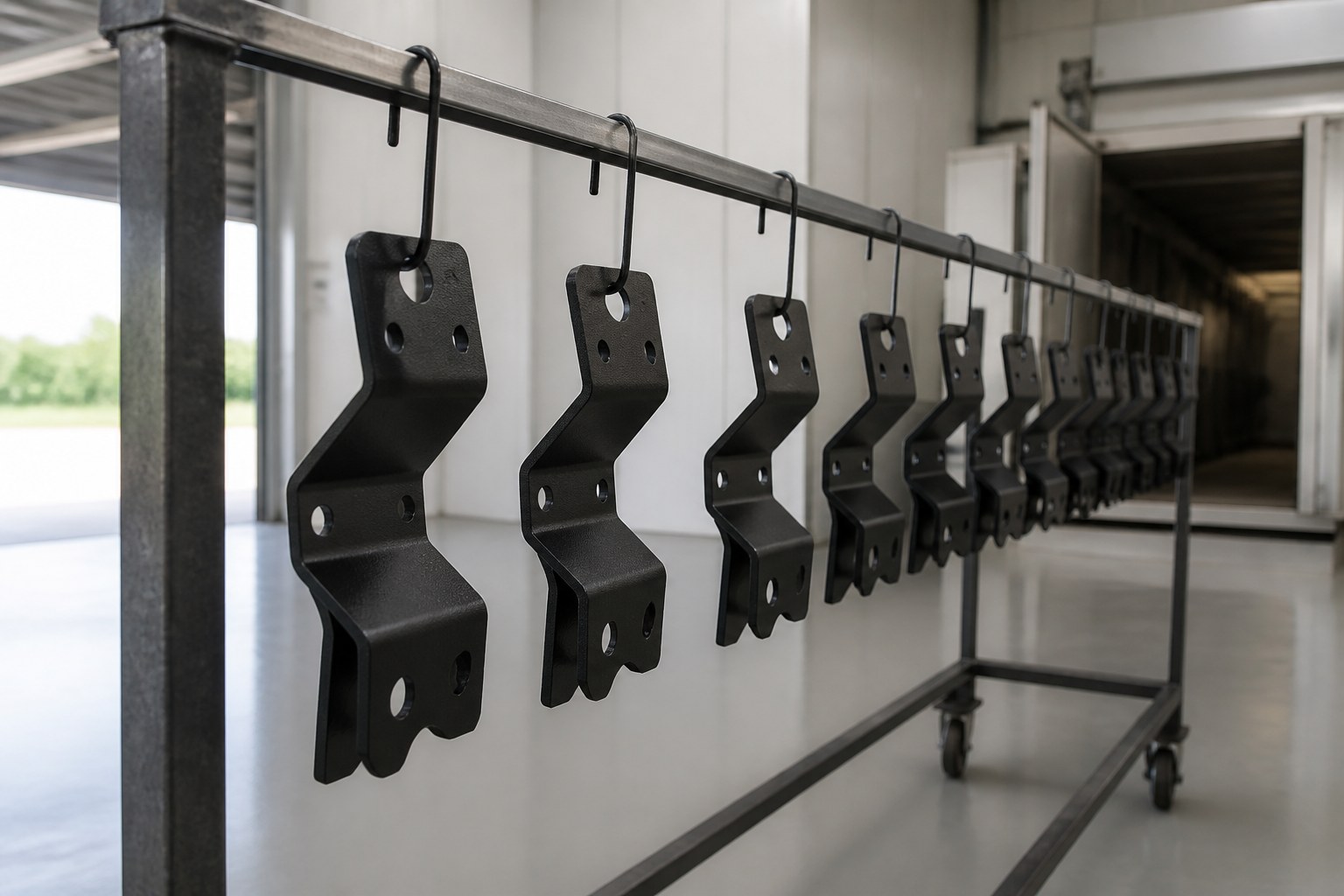
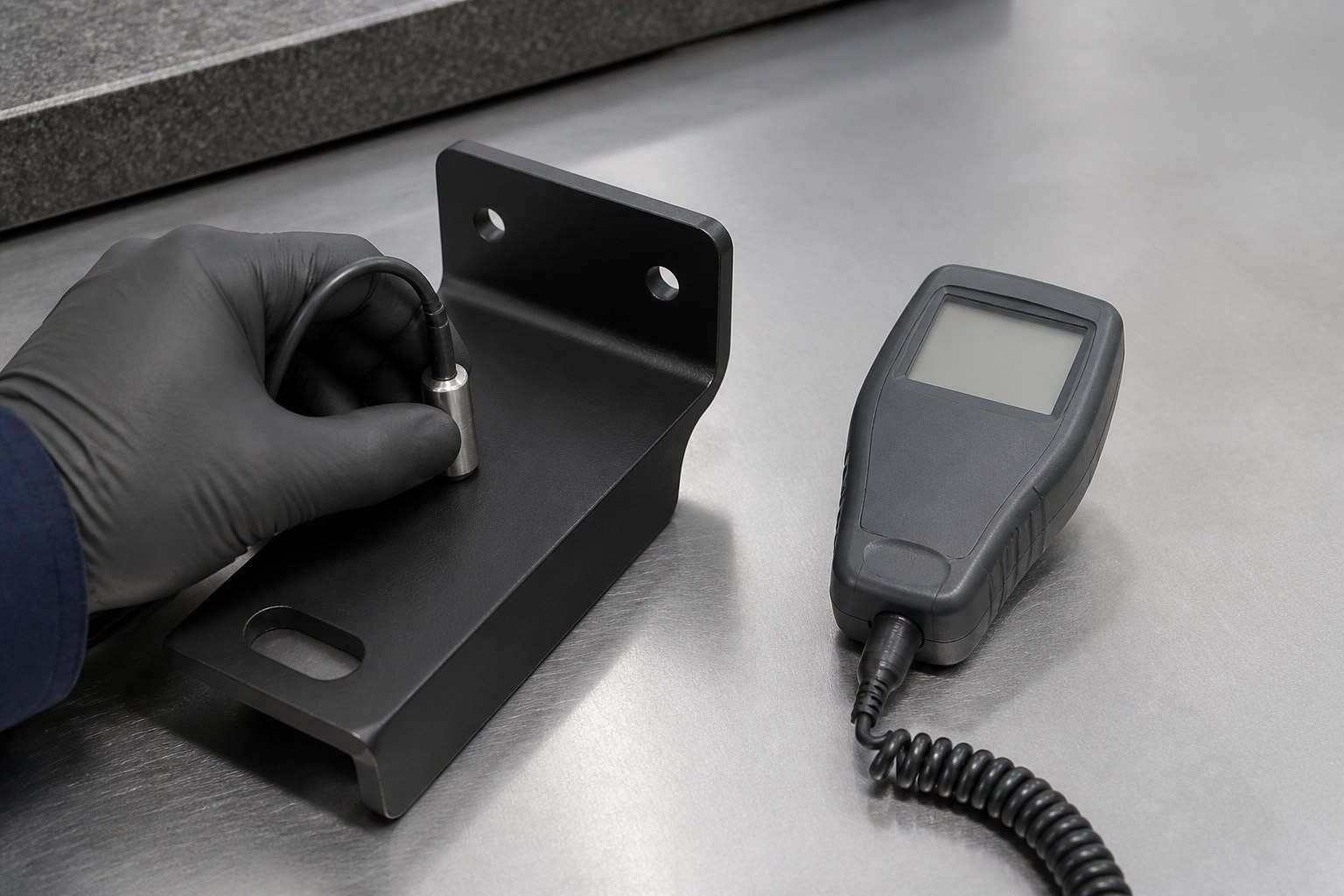
Pretreatment, powder coating and passivation run in-house on the same floor as the forming and welding, which means the finish spec is set at DFM stage, not improvised at the end. Coating thickness is measured on every batch and the readings ship with the parts. Masking for logos, grounding pads and threads is planned into the finishing route before the first part is coated — rework is designed out, not discovered.
Finish Specification Checklist
- Finish type (powder / zinc / anodize / brush / passivate / bare)
- Colour: RAL number or reference sample
- Gloss level if appearance matters
- Masking: logo areas, grounding pads, threads, contact surfaces
- Coating thickness requirement, if your spec enforces one
- Grit direction or surface roughness for brushed stainless
- Certificate or thickness reading needed with the batch?
Specify the finish, get the right part
Send your drawing with the finish requirements — an engineer reviews the route and returns pricing plus DFM feedback within 3 business hours. MOQ from 1 pc.
FAQ
What is the difference between powder coating and paint?
Powder coating is applied as a dry powder and cured in an oven, forming a thicker, more uniform and more impact-resistant film than wet paint. It is the standard for industrial sheet metal parts and is applied in-house at XCWY.
Can you match a specific RAL colour?
Yes. We match RAL numbers directly and can also match a supplied reference sample. Gloss level is specified alongside the colour.
What finish should I use for outdoor parts?
For steel, powder coating over a galvanized base gives the best corrosion performance, with hot-dip galvanizing for heavy structural parts. For coastal sites, stainless 316L with passivation is the robust option.
Do you anodize aluminium parts?
Yes — clear and dyed anodizing to 5–25 µm. Note that anodizing adds a small dimensional growth to threaded holes, which is allowed for in our DFM review.
Do you verify coating thickness?
Yes. Coating thickness is measured on every batch and the readings are shipped with the parts — no assumptions, no “it looked even”.
Leave a Reply