Heavy-Duty Mounting Brackets: A Custom Stamping & Fabrication Case Study From XCWY
Most bracket buyers treat the part as a commodity until a batch arrives with hole positions that do not line up, or a finish that blisters after one winter. This case study walks through a recent heavy-duty mounting bracket programme at our Nanpi plant — the client requirements, the DFM changes, the process route, and the inspection points — so you can compare the route against your own supply chain.
In short: a US-based vehicle and equipment OEM (anonymised for confidentiality) needed a recurring supply of heavy-duty mounting brackets — several families, mixed gauges, welded gussets, and a powder-coated finish that had to survive outdoor service. XCWY returned a DFM review within one working day, qualified a first article, and now runs the programme under ISO 9001:2015 with batch-tied inspection records.
Client Background & Project Requirements
The client supplies mounting and structural hardware for commercial vehicle fit-outs and outdoor equipment. Their previous supplier batch-produced brackets from a loose drawing set; hole positions drifted between batches, and rework was costing more than the parts. They asked XCWY to consolidate the programme under one accountable route.
Core client requirements:
- Product type: heavy-duty mounting brackets across three families — engine and chassis mounting brackets, equipment-mounting plates, and reinforced corner brackets with welded gussets.
- Material: hot-rolled and cold-rolled carbon steel, 2.0–6.0 mm, with EN 10204 material certificates supplied per batch.
- Process control: hole positions and profile geometry held to drawing; welded gussets with controlled distortion.
- Finish: zinc-plated options and a weather-resistant powder coating for outdoor-fit parts.
- Compliance: ISO 9001:2015 quality records, first-article inspection, batch traceability.
DFM Review & Engineering Coordination
The client uploaded 3D STEP files through our website. Our engineers reviewed the bend sequences, hole patterns and weld access within one working day, and proposed four changes that reduced cost without changing function:
1. Hole-pattern consolidation — several callout holes were moved to common tooling positions so two bracket families could share one progressive die set.
2. Bend-sequence optimisation — flat patterns were re-developed against our own tooling so folded parts seat correctly first time.
3. Gusset weld sizing — intermittent welds were specified where full-length welds added distortion without adding strength.
4. Edge preparation — laser-cut edges were de-burred on parts that sit against hoses and cables.
After approval, XCWY produced a full-scale first-article sample for the client to validate fit, finish and load performance before mass production started.
Full-Process Production Implementation
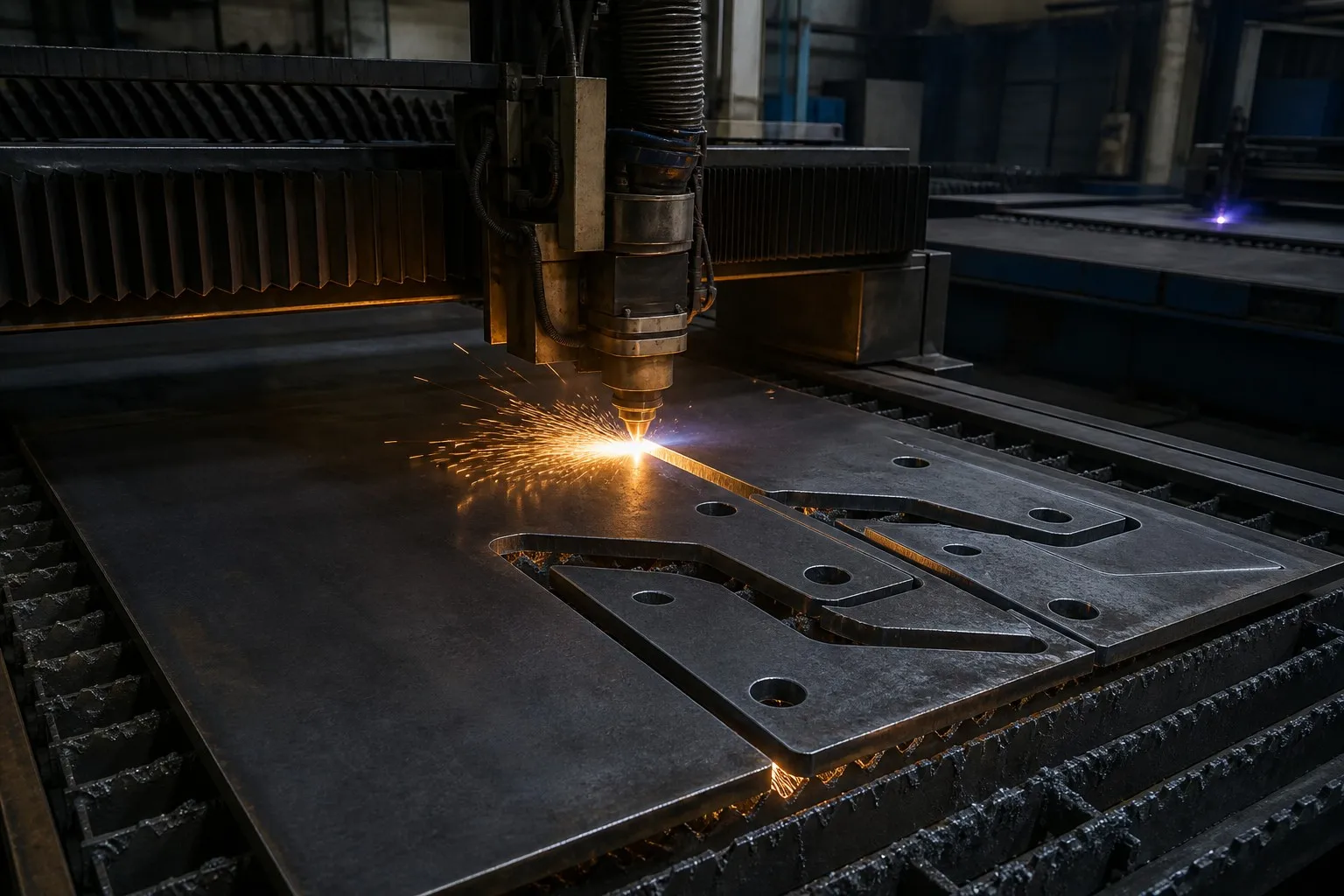
1. Laser cutting: blanks from 2.0–6.0 mm carbon steel were cut on our 12,000 W fibre laser, with profile geometry verified on the first article before the programme was locked.
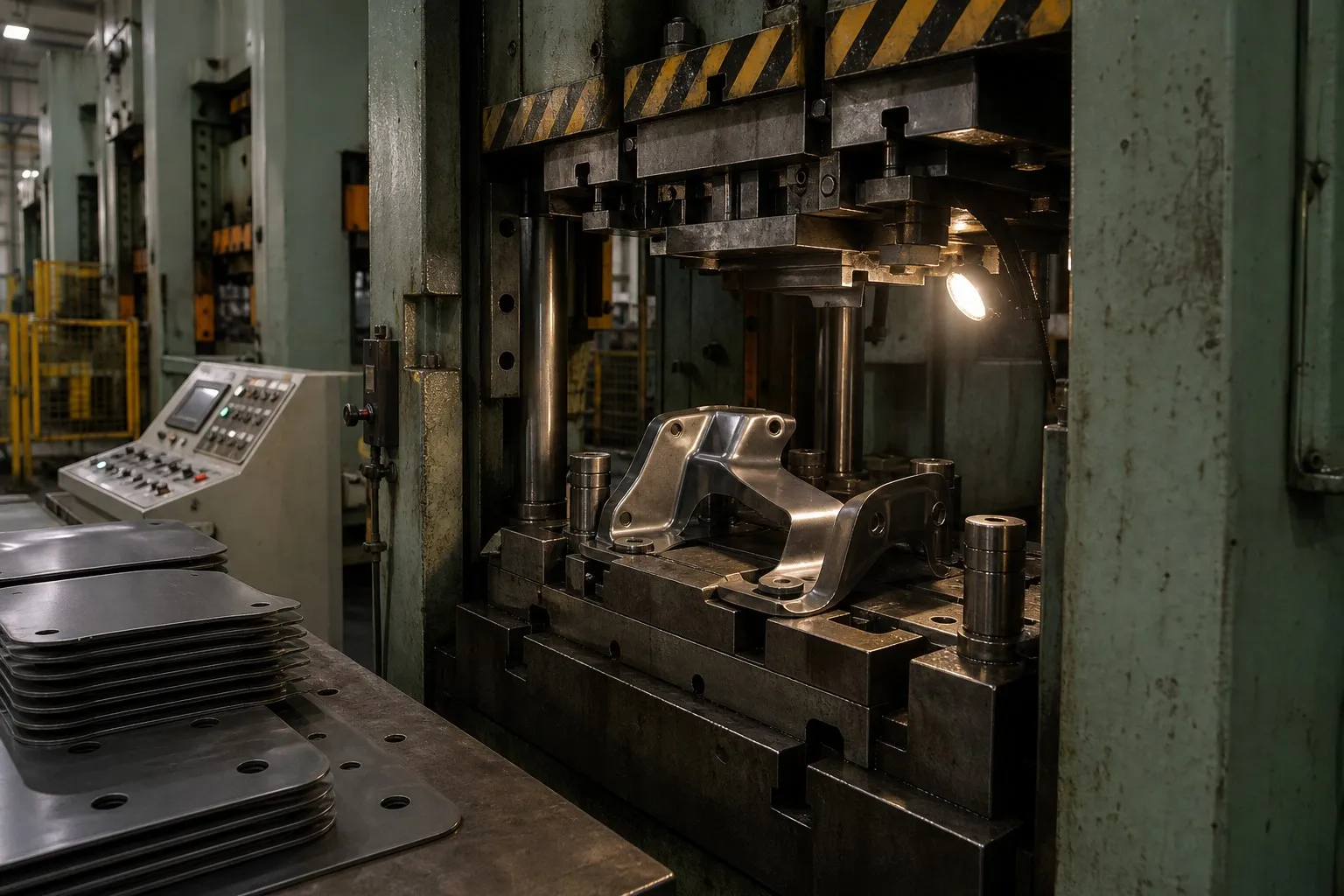
3. CNC bending: flanges and offset details were formed on CNC press brakes with ±0.5° angle control.
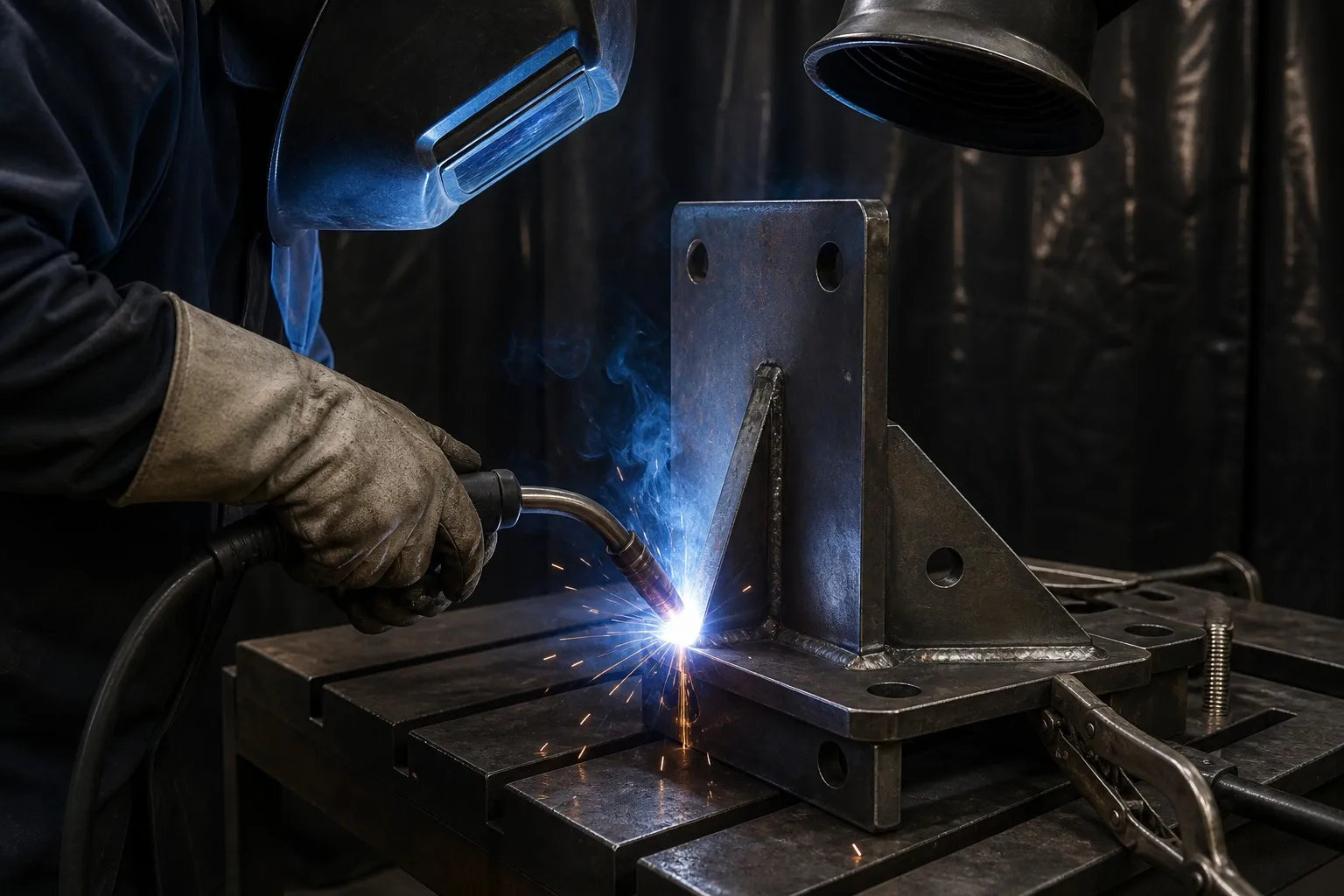
4. Welding: gussets and reinforcements were MIG-welded in fixtures to control distortion; welds received visual inspection per the quality plan.
Quality Control System
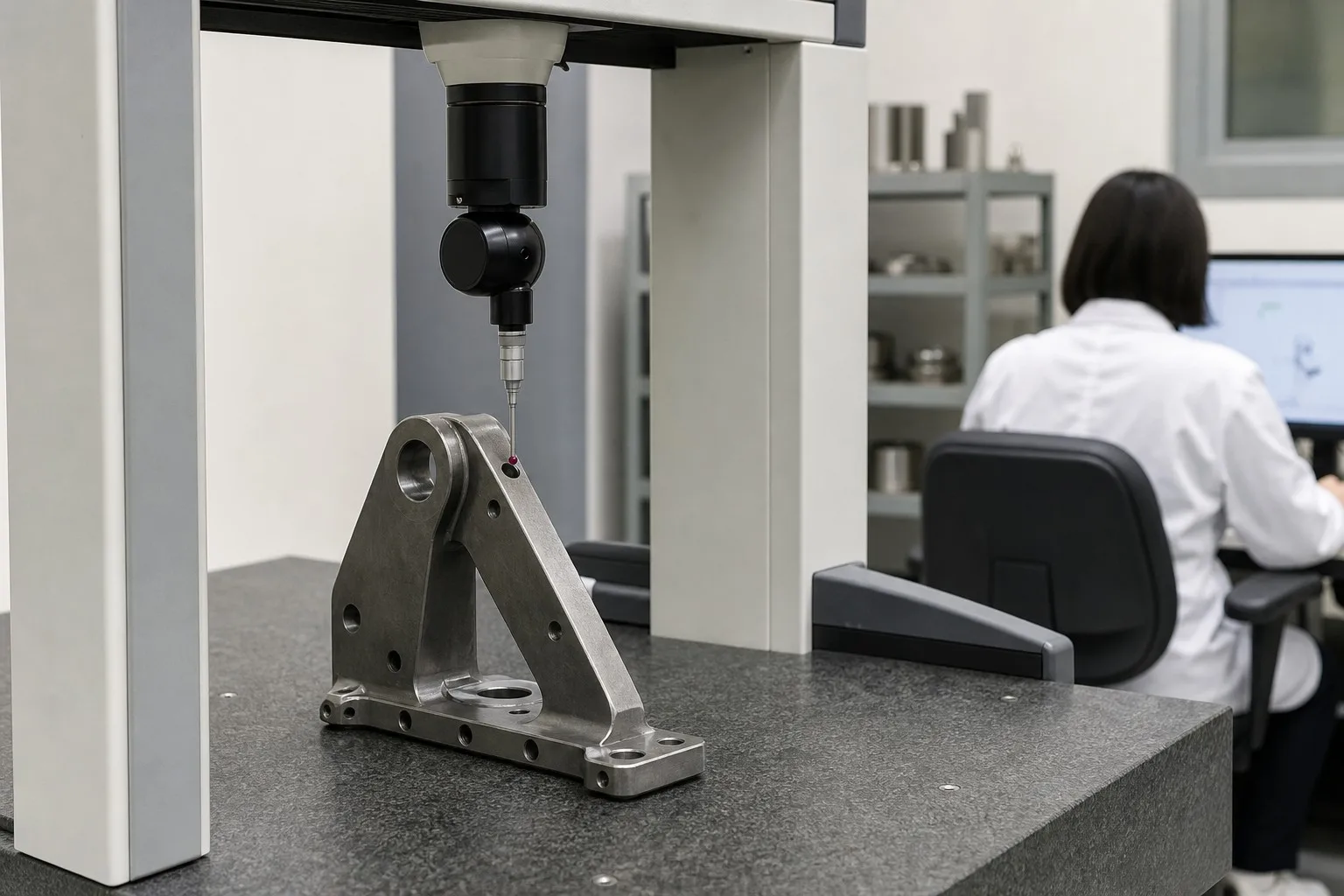
Quality is managed under ISO 9001:2015 (registration 34025Q30296R0S):
- Incoming inspection — material certificates checked against the EN 10204 requirement on receipt.
- First-article inspection — profiles, hole positions and angles verified before each batch starts.
- In-process inspection — dimensional sampling per batch, weld visual checks.
- Finished-product release — critical hole positions measured on the CMM, coating thickness readings recorded, and documentation issued to the purchase specification.
Surface Treatment & Export Packaging
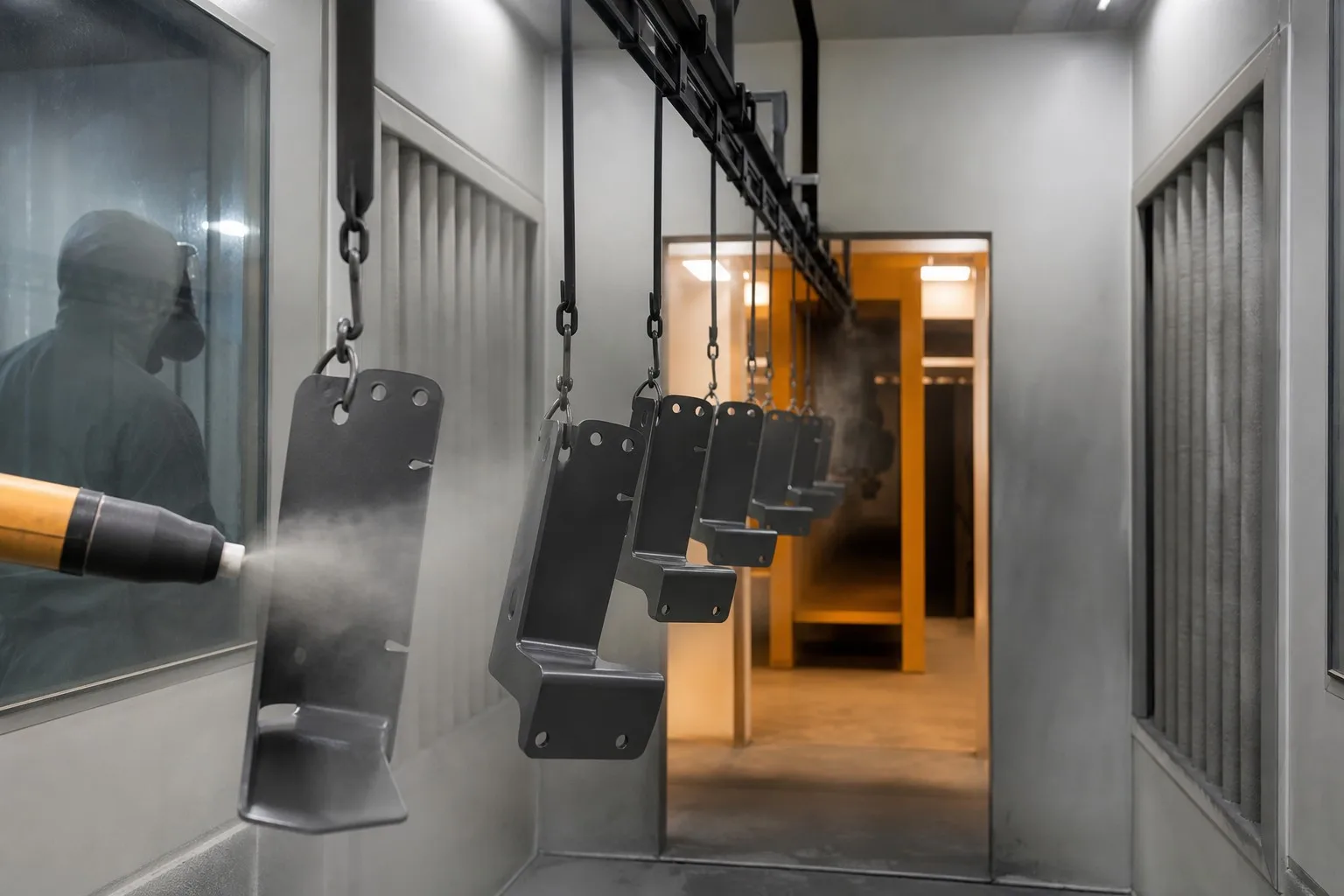
Outdoor-service brackets were degreased, pre-treated and coated with weather-resistant polyester powder in our own line. Brackets for in-cabinet or indoor use were zinc plated where the drawing specified it. Parts were packed in export cartons with corner protection, labelled per family, and palletised with a packing list per batch — the client drops them straight into their own kitting line.
Delivery & Programme Status
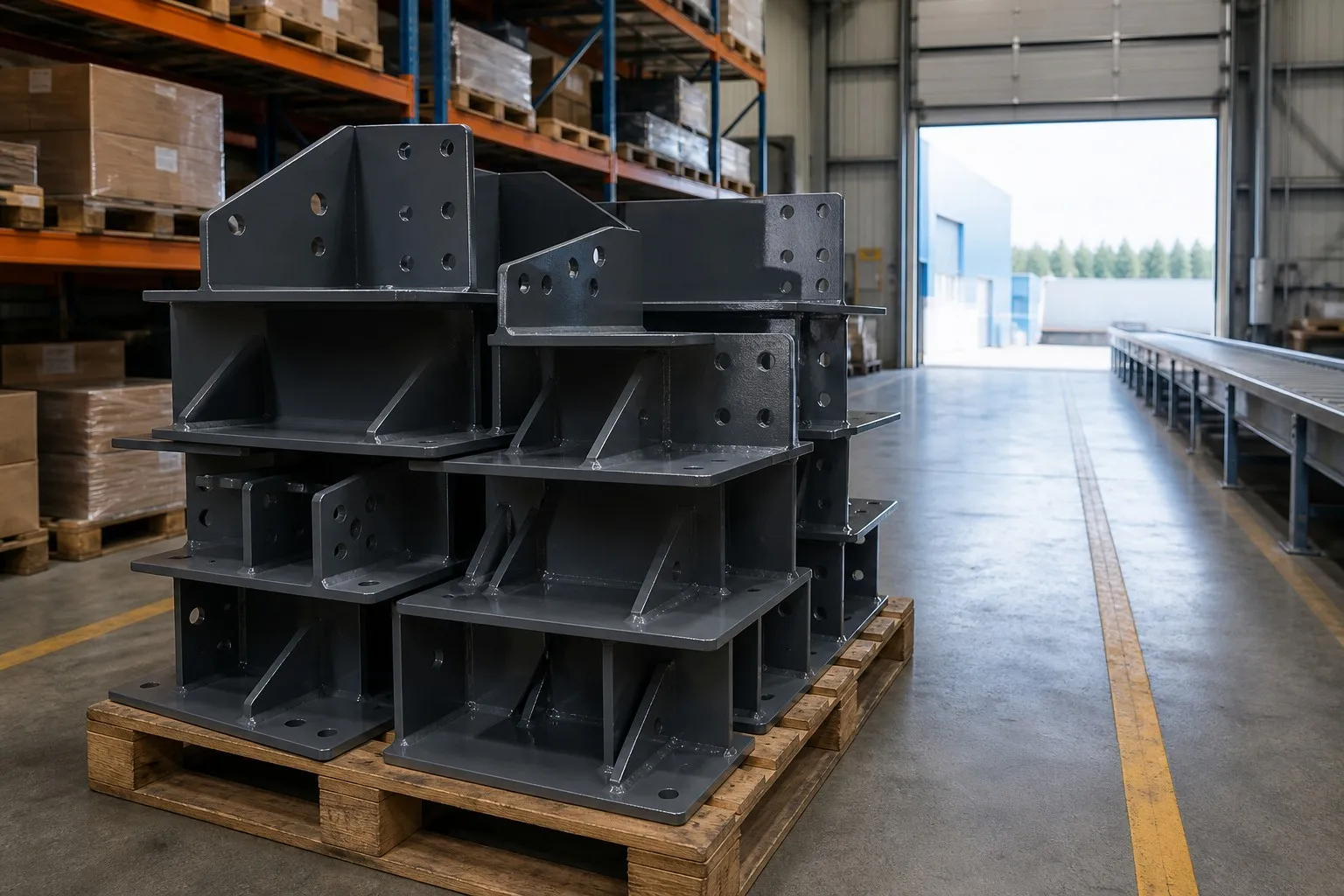
Initial production was delivered on schedule, and the client has since run scheduled reorders against the approved tooling. Every shipment carries batch-tied inspection records and material certificates, so their incoming QC can release stock without re-measuring every lot.
Case Summary
What this project demonstrates
- Early engineering input — a free DFM review that consolidates tooling and removes cost before a single part is cut.
- Full-process capability — cutting, stamping, bending, welding and finishing in one building under one quality system.
- Drawing-based quality — inspection records tied to your drawing and purchase specification, not to supplier optimism.
- Programme reliability — first article before mass production, batch traceability, and reorders run against approved tooling.
An engineer reviews your drawing and returns pricing plus DFM feedback within 3 business hours. MOQ from 1 pc, NDA signed on request.
FAQ
What steel grades do you use for heavy-duty brackets?
Hot-rolled and cold-rolled carbon steel in 2.0–6.0 mm, plus stainless and galvanised options. EN 10204 material certificates are supplied with each batch.
Can you hold hole positions across large production batches?
Yes — hole patterns run on progressive and compound tooling (25–400 tonne presses), with critical positions verified on the CMM at final inspection.
Do you make brackets for outdoor use?
Yes. Outdoor-service brackets are finished with weather-resistant polyester powder coating in-house; coating thickness is verified per batch.
What is the minimum order?
MOQ from 1 pc for validation. Production quantities are quoted per project — we run both single prototypes and recurring series.
How fast can I get a quote?
Engineering review and quotation are returned within 3 business hours of receiving your drawing.
Leave a Reply