For most sheet metal parts under 20 mm thick, fiber laser cutting is the default and the burden of proof sits with the alternatives. The laser cutting vs punching question is really a question about volume and feature repetition. Laser needs no tooling and cuts any profile; punching needs a tool for every shape but becomes extremely fast when the same feature repeats thousands of times. Waterjet earns its place when heat is unacceptable or the material is not metal. Plasma earns its place when the plate is thick and the tolerance is loose. The laser cutting vs waterjet comparison matters most for sheet parts, since both cut the same materials with very different edge and heat behaviour.
The mistake worth avoiding is choosing a cutting process by habit. A part that would take a laser twelve seconds might take a turret punch four. It might instead need waterjet because the alloy is heat sensitive. Choosing wrongly rarely produces a scrap part — it produces a part that costs more than it should, which is harder to notice.
This guide compares all four processes on the criteria that actually change a quotation: thickness, tolerance, edge quality, tooling, speed and secondary operations.
How laser cutting vs waterjet and the other processes work
Fiber laser cutting
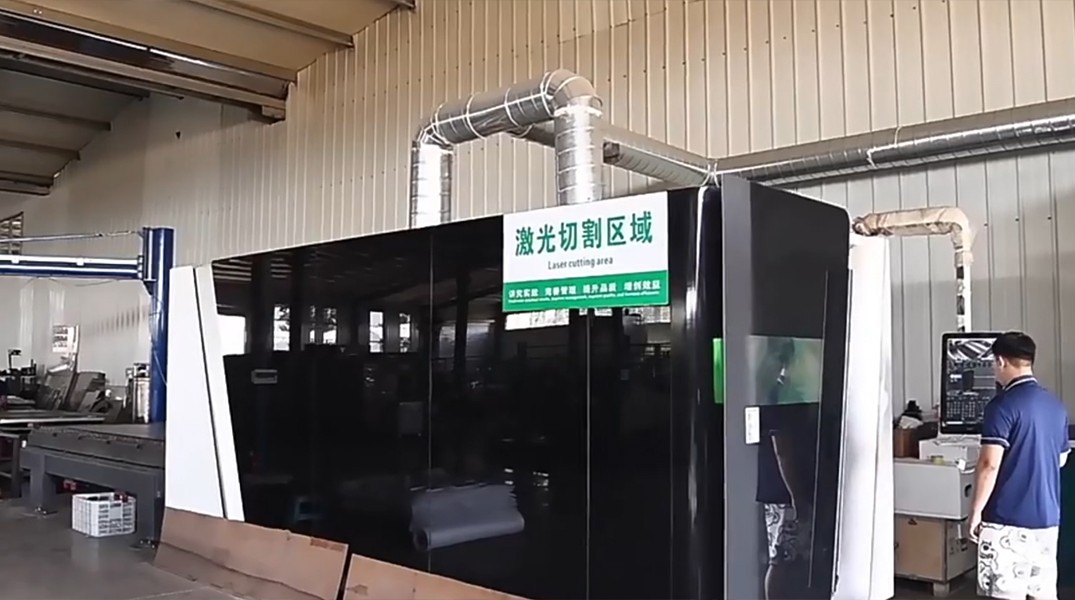
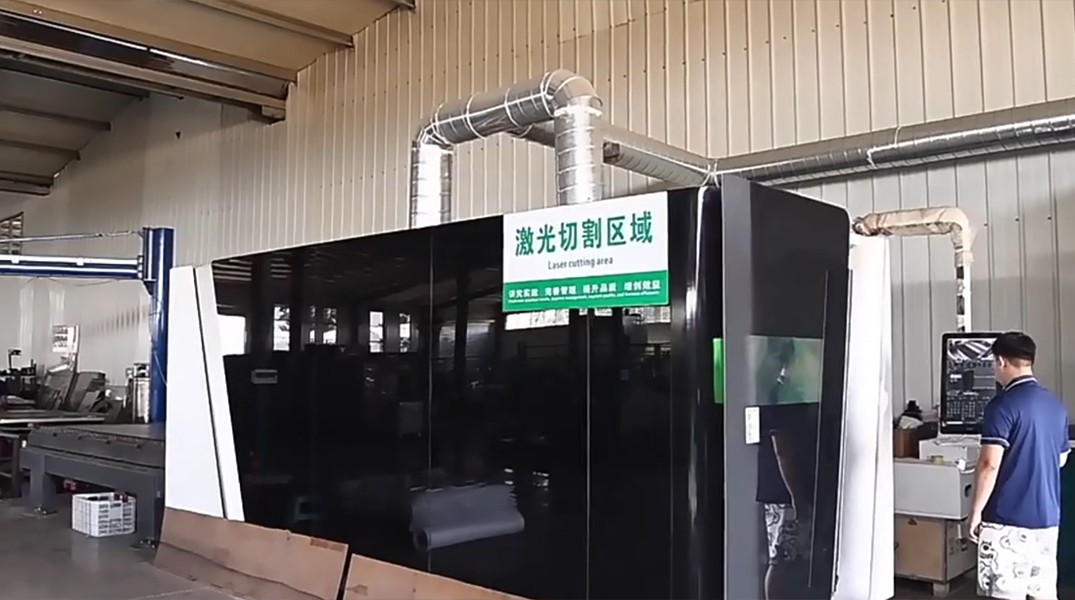
A focused laser beam melts and vaporises a narrow line of material. An assist gas then blows the melt out of the kerf. Oxygen is used on carbon steel for speed, nitrogen on stainless and aluminium for a bright, oxide-free edge. There is no contact and no tool wear, so the process cuts any profile the CAM software can draw. Our 12,000 W fiber laser cuts carbon steel up to 25 mm.
Punching
A punch and die shear the material mechanically. On a turret or servo punch press, a library of tools sits in a magazine and the sheet is indexed under them. Round holes, slots and standard shapes come from a single hit. Non-standard profiles are nibbled from overlapping hits, which is slower and leaves a stepped edge. Punching can also form features — louvres, countersinks, extruded threads, embosses — that a laser cannot produce at all.
Waterjet
A high-pressure stream of water carrying abrasive garnet erodes the material. Because this is cold cutting, there is no heat-affected zone, no thermal distortion and no change to the material’s temper. As a result, waterjet cuts almost anything, including titanium, composites, glass, stone and thick plate. However, it is also the slowest of the four, and the abrasive is a consumable cost.
Plasma
An ionised gas arc melts the material and blows it away. Plasma is fast and inexpensive on thick conductive plate. However, the kerf is wide, the heat-affected zone is substantial and the edge typically has bevel and dross. It is a structural-steel process, not a precision process.
Laser cutting vs punching: the real trade-off
The two processes compete directly on thin sheet, so it is worth separating the arguments.
Laser advantages: no tooling cost or lead time, arbitrary contours and lettering, tight nesting because parts can be placed close together, excellent edge quality on the first pass, and no setup penalty for changing the design between batches. For prototypes and design iterations, laser wins outright — there is nothing to buy before cutting.
Punching advantages: very fast on repetitive standard features, and able to form as well as cut. It also runs cheaper per hit on thin material and adds no heat input at all. If a panel has three hundred identical ventilation holes, a punch will finish it while the laser is still tracing outlines.
In practice the strongest answer to laser cutting vs punching is often “both”. Punch the repetitive standard features and forms, laser the complex outer profile, and nest the work accordingly. The combined route is normal in high-mix sheet metal production. That is one reason it pays to work with a shop that runs a full fabrication chain rather than a single machine.
Laser cutting vs waterjet comparison table
| Attribute | Fiber laser | Punching | Waterjet | Plasma |
|---|---|---|---|---|
| Typical tolerance | ±0.05 – 0.15 mm | ±0.10 – 0.20 mm | ±0.08 – 0.25 mm | ±0.5 – 1.5 mm |
| Practical thickness (steel) | 0.5 – 25 mm | 0.5 – 6 mm | Up to 150 mm+ | 3 – 50 mm+ |
| Kerf width | 0.2 – 0.4 mm | No kerf (shear) | 0.8 – 1.2 mm | 2 – 4 mm |
| Heat-affected zone | 0.1 – 0.3 mm | None | None | 0.5 – 3 mm |
| Edge quality | Clean, minimal burr | Slight burr, roll-over edge | Matte, taper on thick plate | Dross and bevel common |
| Tooling required | None | Punch and die per shape | None | None |
| Can form features | No | Yes — louvres, embosses, extrusions | No | No |
| Non-metals | No | No | Yes | No |
| Reflective metals | Yes, slower | Yes | Yes | Yes |
| Relative speed, 3 mm steel | Fast | Very fast on standard holes | Slow | Fast |
| Best-fit application | General sheet metal, brackets, enclosures | High-volume repetitive panels | Heat-sensitive alloys, thick or exotic material | Heavy structural plate |
Laser cutting vs waterjet: when cold cutting wins
Laser cutting vs waterjet is the classic trade-off on heat-sensitive alloys: laser is fast but adds heat, while waterjet is slow but completely cold. When fatigue performance, temper or edge metallurgy matters, waterjet wins despite the slower feed rate. When speed and tolerance matter more, the laser is the better answer.
Laser cutting vs waterjet: material compatibility
Fiber lasers handle reflective metals such as copper and brass, which older CO₂ systems struggled with. Feed rates are slower, and nitrogen assist keeps the edge clean. Aluminium cuts well but leaves a slightly heavier burr as thickness rises. Stainless cut with nitrogen produces a bright edge that needs no descaling before welding or finishing. How that edge performs in service depends on grade; our guide to 304 vs 316 vs 316L stainless steel explains the difference.
Waterjet is the only one of the four that cuts non-conductive and non-metallic materials, and the only one that leaves the material’s heat treatment completely untouched. That matters for hardened tool steel, some aerospace alloys and anything where a heat-affected zone would compromise fatigue performance. Plasma requires an electrically conductive workpiece by definition.
Galvanized and pre-coated sheet can be laser cut. However, the coating burns back a small amount at the edge, typically about a millimetre. It is cosmetic rather than structural, and edge protection can be applied afterwards. Grade-by-grade behaviour is summarised in our material reference.
Laser cutting vs waterjet: cost behaviour across volume
Cutting cost has two components: setup and run. Laser has almost no setup: load the DXF, load the sheet, cut. Its cost per part is therefore nearly flat from one piece to ten thousand. Punching carries a tooling cost bought once and a setup that must be loaded. However, its per-hit run cost on thin material is very low, so the curve falls steeply with volume.
The crossover therefore depends on feature repetition more than part count. A hundred parts with unusual contours favour laser. Ten thousand parts with the same eight standard holes favour punching. Waterjet almost never wins on cost for standard sheet steel — it wins when nothing else can do the job. Plasma wins on thick plate where the tolerance requirement is genuinely loose.
Secondary operations to budget for
- Deburring. Laser edges on thin material are often acceptable as cut; thicker sections and punched parts usually need deburring, particularly if the part will be handled or painted. Cut-edge quality classes for thermal cutting are defined in ISO 9013, which is a useful reference when specifying an acceptable edge.
- Descaling. Oxygen-cut carbon steel carries a light oxide film that must be removed before painting or powder coating.
- Taper correction. Waterjet leaves a slight taper on thick sections unless dynamic head compensation is used.
- Dross removal. Plasma cuts frequently require grinding, which erodes the process’s apparent cost advantage.
- Flat pattern accuracy. If the part will be bent afterwards, the flat pattern must use the correct K-factor for the material. Cutting a perfect blank from the wrong flat pattern produces a perfectly wrong part — a check worth doing before bending.
Preparing files that quote accurately
Send a DXF drawn 1:1 in millimetres, with cut geometry on a single layer and closed polylines for every internal cutout. Remove title blocks, dimensions and construction lines — CAM reads cut paths, and stray geometry gets cut unless someone notices it first. Provide a dimensioned PDF alongside the DXF so critical dimensions and material grade are unambiguous.
Two design rules save the most money. Keep minimum hole diameter at or above material thickness, since smaller holes degrade in quality and may need secondary drilling. Also keep at least one material thickness of space between adjacent cuts and between a cut and a bend line. This prevents distortion during cutting or forming.
Laser cutting vs waterjet: frequently asked questions
Is laser cutting more accurate than punching?
Yes, typically. Fiber laser holds around ±0.05 to ±0.15 mm on sheet, while punching is usually ±0.10 to ±0.20 mm because of tool clearance and sheet indexing. The gap narrows on simple parts with few features and widens on complex contoured profiles.
When should I choose punching over laser cutting?
Choose punching when the same standard features repeat many times across a high-volume part, or choose it when you need formed features such as louvres, countersinks or extruded threads that a laser cannot produce. Punching also avoids any heat input entirely. For one-offs, prototypes or arbitrary contours, laser is the better choice.
What thickness can a 12,000 W fiber laser cut?
Our fiber laser cuts carbon steel up to 25 mm. Stainless and aluminium cut to lower maximum thicknesses than carbon steel because they are processed with nitrogen assist. As thickness approaches the maximum, feed rate drops and per-part cost rises, so the most economical work sits well below the limit.
Does laser cutting distort thin sheet metal?
Minor distortion can occur on very thin or large parts because of localised heat input. The heat-affected zone is small, however, at roughly 0.1 to 0.3 mm. Distortion is controlled through cut sequencing, micro-joints and appropriate nesting. If a part cannot tolerate any thermal input at all, waterjet is the correct alternative.
Is waterjet worth the extra cost for standard steel parts?
Usually not. For standard carbon or stainless sheet, laser is faster and cheaper with comparable or better tolerance. Waterjet is justified when the material is heat sensitive, non-metallic, extremely thick, or when the part must retain its original temper exactly.
Which is faster, laser cutting vs waterjet?
On 3 mm steel, laser is several times faster than waterjet. Waterjet’s speed advantage only appears on very thick plate or exotic materials, where laser cannot operate at all.
Can several cutting processes be used on one part?
Yes, and it is often the cheapest route. A typical combination punches repetitive holes and formed features, then lasers the complex outer profile. Combining processes is standard practice in high-mix sheet metal work and requires a shop that runs both.
Send a DXF and we will tell you which process fits
If you are unsure which cutting route your part should take, the quickest way to settle it is simple. Have an engineer look at the geometry and the volume together. We return a quotation within 3 business hours, with free design-for-manufacture feedback on hole sizes, edge conditions and flat pattern accuracy. Send your DXF to xcwystamping@xcwybj.com or use the quote request form.
Need a decision on your part?
Send your drawings for an engineering review — pricing plus DFM feedback within 3 business hours. MOQ from 1 pc, NDA on request.
Leave a Reply