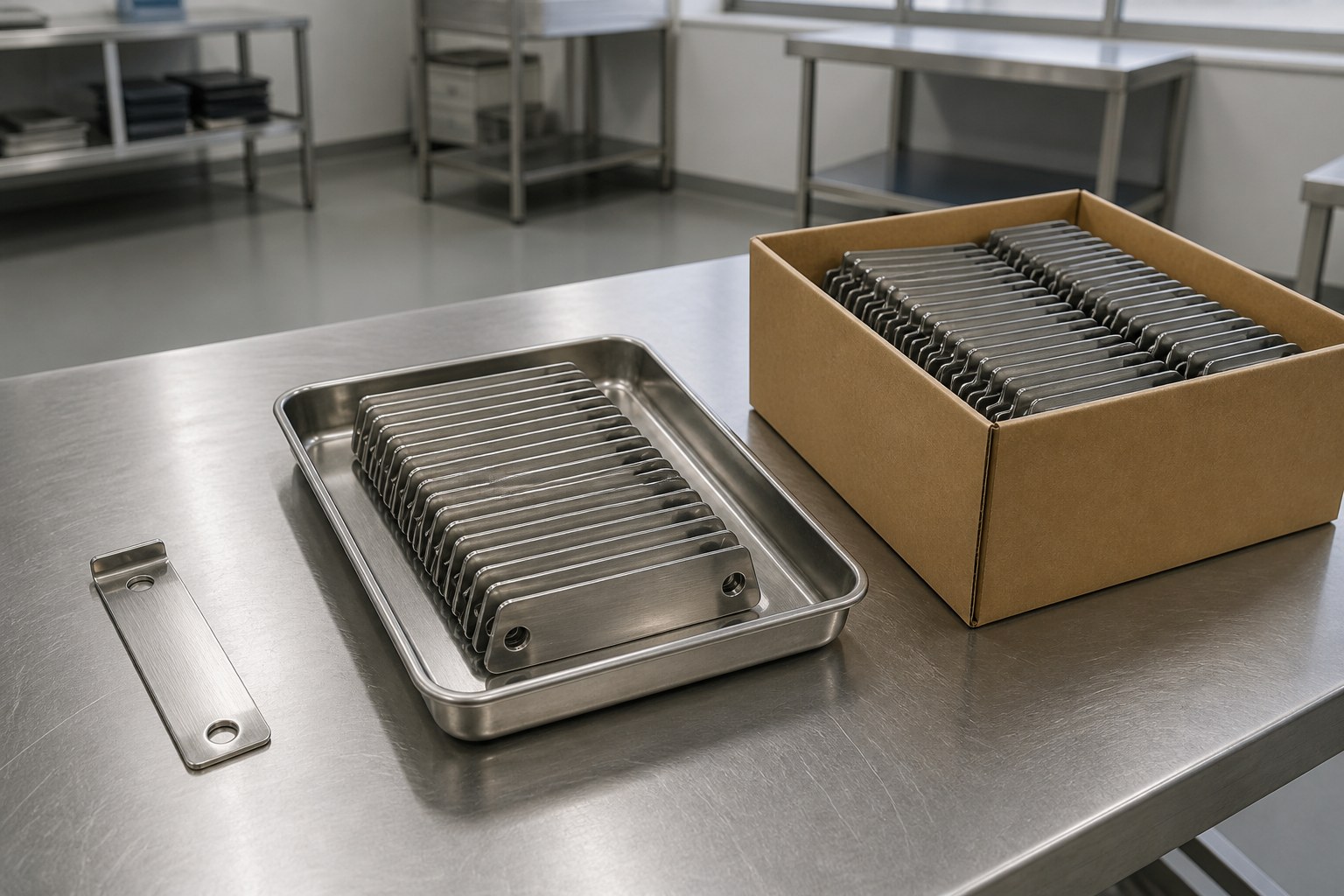
What is the minimum order quantity (MOQ) for custom metal parts, and how much does custom metal stamping or sheet metal fabrication actually cost? At XCWY (Nanpi Xinchengweiye Hardware Products Co., Ltd.), the minimum order quantity is 1 piece for toolless sheet metal fabrication (12,000 W fiber laser cutting, 3,200 mm CNC press-brake bending, 5-axis CNC milling on our HDL-OKK DMU38, and TIG/MIG/laser welding). For parts requiring dedicated hard toolingâsuch as progressive die stamping (25â400T) or multi-stage hydraulic deep drawingâwe run low-volume production batches starting from 100 to 500 pieces, while unit economics typically reach optimal break-even between 1,000 and 5,000 pieces.
Because overseas OEM buyers frequently see conflicting MOQ rules and opaque “per-part” quotes when comparing instant-quote platforms, trading companies and direct Chinese factories, this engineering cost guide breaks down the exact cost formula, quantity crossover thresholds and hidden charges across every major metal manufacturing route.
1. Quick Answer: MOQ, Tooling Cost & Unit Price by Process Route
In custom metal manufacturing, MOQ is governed by setup and tooling amortization, not an arbitrary sales policy. When a part is cut by fiber laser and formed on a CNC press brake using standard V-dies, setup takes 15 to 45 minutes, making 1-piece prototypes and 20-piece pilot runs economically viable. When a part requires a custom D2/SKD11 progressive stamping die or a multi-stage deep-drawing toolset, die setup and strip feeding take 1 to 3 hours on a 160Tâ400T press, which sets the practical batch threshold.
| Manufacturing Process Route | Prototype / Sample MOQ | Production Batch MOQ | Typical Tooling Investment (USD) | Best Annual Volume Range |
|---|---|---|---|---|
| Laser Cutting + CNC Press Brake Bending (0.5â25 mm sheet/plate) | 1 piece | 10 â 500 pieces | $0 (Standard press-brake punches & V-dies) | 1 â 1,500 pcs/year |
| 5-Axis CNC Milling (HDL-OKK DMU38) (±0.005 mm precision features) | 1 piece | 5 â 500 pieces | $0 â $350 (Soft jaws or modular vacuum/hydraulic fixture) | 1 â 1,000 pcs/year |
| Single-Stage Stamping (Blanking, piercing or forming in separate dies) | 5 â 20 pieces (via laser blank + form die) | 200 â 1,000 pieces | $600 â $2,200 per stage tool (100% buyer-owned) | 500 â 10,000 pcs/year |
| Progressive Die Stamping (25â400T automated coil feed) | 10 â 50 pieces (T1 off-tool FAI samples) | 1,000 â 3,000 pieces | $1,800 â $8,500+ (D2/SKD11 multi-station die, 300kâ500k shots) | 3,000 â 500,000+ pcs/year |
| Multi-Stage Deep Drawing (Seamless shells, cans & filter housings) | 5 â 20 pieces (T1 off-tool FAI samples) | 300 â 1,000 pieces | $2,200 â $9,500+ (Draw ring, punch, blank-holder & trim tools) | 500 â 100,000+ pcs/year |
| Welded & Assembled Enclosures (Laser + Brake + TIG/MIG + PEM + Powder Coat) | 1 piece | 10 â 500 pieces | $0 â $600 (Modular welding & checking fixture) | 10 â 5,000 pcs/year |
2. How Much Does Custom Metal Stamping & Sheet Metal Fabrication Cost? (The 5 Cost Drivers)
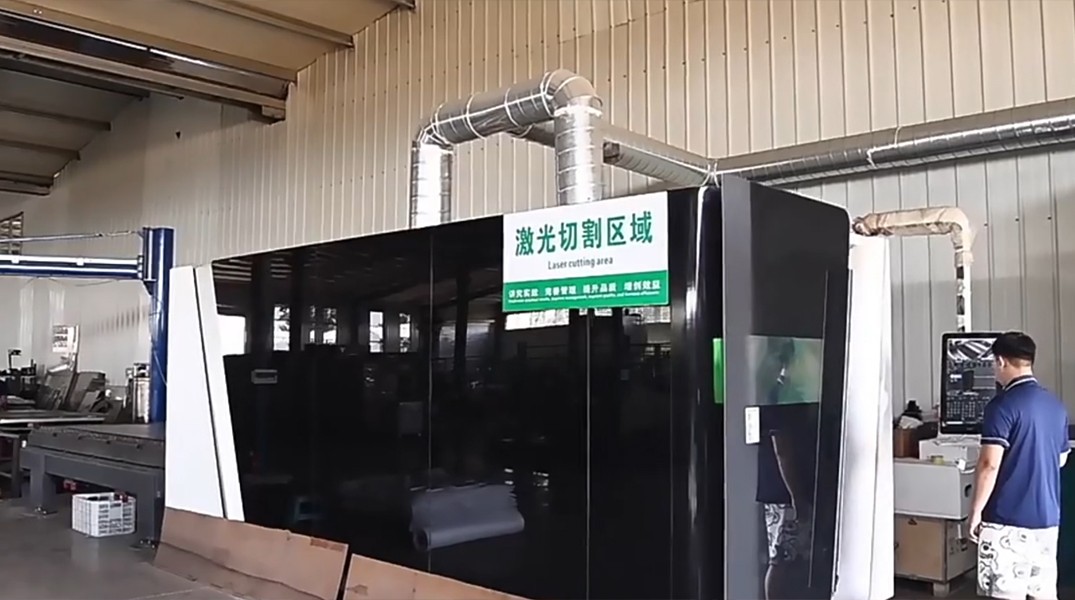
Every defensible factory quotation separates Non-Recurring Engineering / Tooling (NRE) from the Unit Piece Price. At XCWY, our engineers calculate unit piece price from five transparent physical inputs rather than black-box software markups:
Unit Piece Price = Gross Material Cost â Scrap Credit + Machine & Labor Cycle Cost + Surface Treatment + Inspection & Export Packaging
| Cost Component | Share of Unit Price | How Engineers Calculate It | How Buyers Can Reduce It During DFM |
|---|---|---|---|
| 1. Gross Material & Strip Utilization | 35% â 65% | Calculated from the gross blank envelope (flat pattern + strip carrier web + pitch bridge in stamping, or sheet nesting skeleton in laser cutting), not the finished CAD net weight. | Avoid non-standard sheet thicknesses; allow small corner notches or carrier-tab changes that improve coil nesting from 52% to 70%+ utilization. |
| 2. Press / Laser / Bending Cycle Time | 15% â 35% | In laser cutting: pierce count + cutting path length (m/min) + nitrogen/oxygen gas. In bending: number of setup flips and hits on our 3,200 mm JFY TPR8-100. In stamping: press tonnage (25â400T) and strokes per minute (SPM). | Keep all bends in the same punch/V-die family so the operator forms the part in one press-brake setup; combine closely spaced holes into a single pierce station. |
| 3. Secondary Operations (Welding, PEM, 5-Axis CNC) | 10% â 30% | Priced per PEM fastener inserted, per centimeter of TIG/MIG/laser weld seam, plus manual weld grinding/polishing time (often 2Ã the welding time on sanitary SS316L). | Use self-clinching PEM nuts or tab-and-slot self-fixturing joints instead of full-length cosmetic fillet welds where structural load permits. |
| 4. Surface Finishing & Masking | 8% â 20% | Priced by surface area (m²) or batch rack load for powder coating (60â120 µm), zinc plating, anodizing or ASTM A967 passivationâplus manual silicone plugging for masked threads and grounding studs. | Group parts of the same alloy and RAL color into one release batch to avoid minimum furnace/bath lot charges ($80â$150 per color change). |
| 5. Quality Verification (FAI / CMM) & Export Crating | 5% â 10% | Includes First Article Inspection (FAI), CMM programming for tight tolerances (±0.005â0.05 mm), VCI anti-rust film, foam cell dividers and ISPM-15 fumigation-free plywood pallets. | Apply tight tolerances (±0.02â0.05 mm) only to true functional mating datums; allow ISO 2768-m general tolerances on non-critical edges. |
3. Real Quantity Break-Even Example: When to Switch from Laser + Bending to Stamping Dies
A common mistake in B2B procurement is staying on laser cutting and press-brake bending when annual demand has already grown past 1,500 piecesâor conversely, paying $4,000 for a progressive die when the product design is still changing every quarter. Below is a concrete engineering comparison for a 2.0 mm cold-rolled steel (SPCC) mounting bracket with 6 holes, 2 extruded embosses and 3 bends:
| Order / Annual Volume | Route A: Toolless Laser + CNC Brake + PEM/Tap | Route B: Dedicated Progressive Stamping Die (160T Press) | Total Landed Cost Winner & Engineering Verdict |
|---|---|---|---|
| 50 pieces (Prototype / EVT) | Tooling: $0 Unit price: ~$4.80/pc Total: $240 |
Tooling: $3,200 Unit price: ~$0.65/pc + setup Total: $3,380 |
Route A wins by $3,140. Never build hard progressive tooling before field-testing the geometry. |
| 500 pieces (Pilot / DVT) | Tooling: $0 Unit price: ~$2.90/pc Total: $1,450 |
Tooling: $3,200 Unit price: ~$0.58/pc Total: $3,490 |
Route A still wins on first batch, unless the design is 100% frozen for multi-year repeat orders. |
| 1,500 pieces (Crossover Point) | Tooling: $0 Unit price: ~$2.45/pc Total: $3,675 |
Tooling: $3,200 Unit price: ~$0.48/pc Total: $3,920 |
Break-Even Zone (~1,650 pcs). Above 1,650 pieces, the progressive die pays for itself in the very first order. |
| 10,000 pieces (Annual Production) | Tooling: $0 Unit price: ~$2.20/pc Total: $22,000 |
Tooling: $3,200 (one-time) Unit price: ~$0.42/pc Total: $7,400 |
Route B saves $14,600 (66% total reduction) in Year 1, and saves $17,800/year in Year 2+ after tooling is amortized. |
4. Why Direct Factory Quotes Differ from On-Demand Platforms and Trading Companies
When US and European buyers compare quotes for custom metal parts, they typically encounter three supplier models:
- Instant-Quote Marketplaces (e.g., Xometry, Hubs): Excellent for 1â10 piece urgent domestic prototypes, but automated algorithms price every bend and tight tolerance conservatively, add a 30%â50% platform margin, and route your drawing to an anonymous subcontractorâmeaning the shop that makes your prototype may not be the shop that runs your production batch.
- Captive-Tooling Digital Manufacturers (e.g., Protolabs): Fast for simple sheet metal, but they do not offer heavy multi-stage deep drawing or 25â400T progressive die ownership that can be transferred or run for 300,000+ shots.
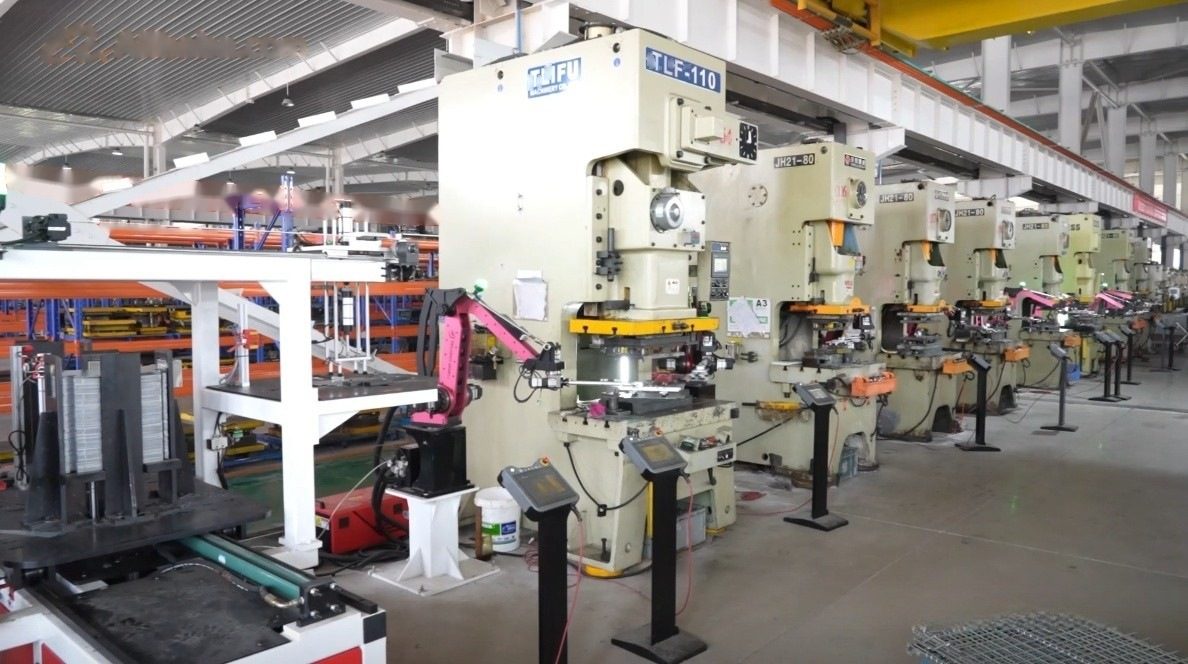
- Direct Chinese Manufacturing Plant â XCWY (Nanpi, Hebei): You communicate directly with the factory floor that owns the 25â400T presses, 12 kW fiber laser, 3,200 mm CNC press brake and HDL-OKK DMU38 5-axis machining center. All custom dies paid for by the buyer are 100% buyer-owned, stamped with your asset ID, maintained free of charge for their rated tool life (300,000â500,000 shots for D2/SKD11), and backed by ISO 9001:2015 registration
34025Q30296R0S. For a side-by-side supplier comparison, see our 2026 Comparison of 10 Metal Fabrication Factories in China.
5. How to Get an Accurate 3-Hour Engineering Quote (RFQ Checklist)
To avoid padded risk margins in your metal fabrication or stamping quote, include five items in your RFQ package to xcwystamping@xcwybj.com or via our online RFQ form:
- 3D CAD + 2D Drawing: STEP (
.step/.stp) or IGES for flat-pattern unfolding, plus a controlled 2D PDF showing functional datums, critical-to-quality (CTQ) tolerances, thread callouts and burr-direction rules. - Exact Material Grade & Temper: Specify the alloy and thickness (for example,
SS316L, 1.50 mmorAL5052-H32, 2.00 mm) rather than a generic gauge number. Check our Sheet Metal Gauge Chart if converting from US gauge. - Batch & Annual Volume: State both prototype quantity (e.g., 5 / 20 pcs) and expected annual usage (e.g., 2,000 / 20,000 pcs/year) so we can quote both the toolless laser route and the progressive/deep-draw tooling route side by side.
- Surface Finish & Masking Zones: Specify coating type, RAL color/gloss, and whether critical holes or grounding studs must be masked prior to finishing.
- Inspection & Commercial Terms: Note if you require EN 10204 3.1 mill certificates, full CMM FAI reports, PPAP Level 3 documentation, and preferred Incoterms (EXW, FOB Tianjin, CIF or DDP).
Related Engineering & Supplier Verification Guides
- How to Reduce Rework in Steel Fabrication & Deep Drawn Stamping: 12 drawing, tooling and weld checks that prevent costly sample modifications and coating rework.
- 10 Metal Fabrication Factories in China Compared (2026): Benchmark verified ISO 9001 certificates, press tonnage (25–400T), 5-axis CNC machining and regional cluster advantages.
- 62 Engineer-Verified Metal Fabrication FAQs: Complete reference for material selection, tolerances, surface finishes and quality documentation.
Frequently Asked Questions
What is the minimum order quantity (MOQ) for custom metal parts at XCWY?
Our MOQ starts at 1 piece for toolless sheet metal fabrication (12 kW fiber laser cutting, 3,200 mm CNC press-brake bending, 5-axis CNC milling and TIG/MIG/laser welding). For parts requiring dedicated progressive stamping dies or multi-stage deep-drawing tools, pilot production starts at 100 to 500 pieces, with full cost break-even typically reached at 1,000 to 5,000+ pieces.
How much does a custom metal stamping die cost in China?
At XCWY’s in-house toolroom in Nanpi, Hebei, a single-stage blanking, piercing or forming die typically costs $600 to $2,200 USD. A multi-station D2/SKD11 progressive die or multi-stage deep-drawing toolset generally ranges from $1,800 to $8,500+ USD depending on part envelope, station count, material thickness and rated tool life (300,000 to 500,000 shots). Tooling is itemized separately from unit piece price and is 100% owned by the buyer.
Can I order 1 to 20 prototypes before paying for a stamping or deep-drawing die?
Yes. For bracket and enclosure geometries, we produce 1 to 50 prototypes in 3â7 days using 12 kW fiber laser cutting, CNC press-brake bending and 5-axis CNC machining with zero hard-tooling cost. For deep-drawn cylindrical or rectangular shells where seamless wall flow must be tested, we can build low-cost modular draw rings or laser-spun/machined validation samples before cutting full production tool steel.
Why is my low-volume sheet metal unit price higher than my high-volume unit price?
In small batches (1 to 20 pieces), machine programming, laser sheet loading, press-brake tool setup (30â45 minutes) and minimum powder-coating or plating lot charges ($80â$150) are divided across very few parts. Moving from 5 pieces to 100 pieces spreads those fixed setup costs 20-fold, typically reducing unit price by 40% to 65% even before switching to hard stamping dies.
Do you charge extra for First Article Inspection (FAI) or EN 10204 3.1 material certificates?
Standard dimensional First Article Inspection (FAI) reports, digital inspection photos and EN 10204 3.1 mill test reports (MTRs) are included with production orders at no extra charge when requested in the RFQ. Full automotive-style PPAP Level 3 packages or 100% CMM serialized inspection on every part are quoted transparently based on measurement cycle time.
How fast can XCWY turn around a custom metal fabrication quotation?
Complete RFQ packages containing 2D PDF drawings (with tolerances and material specs), 3D STEP files and target quantities receive an engineer-reviewed quotation and DFM feedback within 3 business hours. You can also use our online Metal Fabrication Cost Calculator for instant preliminary route comparison.
Leave a Reply