Category: Pricing & Procurement

How custom metal part pricing actually works: tooling amortisation, volume breaks, material cost drivers, RFQ preparation and total landed cost. Written for procurement engineers and sourcing managers.

  • Factory vs Trading Company: How to Tell Who You Are Actually Buying From

    A large share of suppliers presenting themselves as manufacturers on B2B platforms are trading companies. They quote, take a margin, and place your order with a factory you never see. The factory vs trading company distinction matters for one blunt reason: when something goes wrong, you are negotiating with a salesperson who does not control the press, cannot change the schedule, and cannot walk to the shop floor to look at your part.

    This is not an argument that traders are dishonest. Many are competent and some solve real problems. The argument is that you should know which one you are dealing with, because it changes how you manage quality, how you interpret a low price, and what happens when a batch is wrong.

    What follows are seven checks that separate the two, all of which can be run before you place an order and most of which cost nothing.

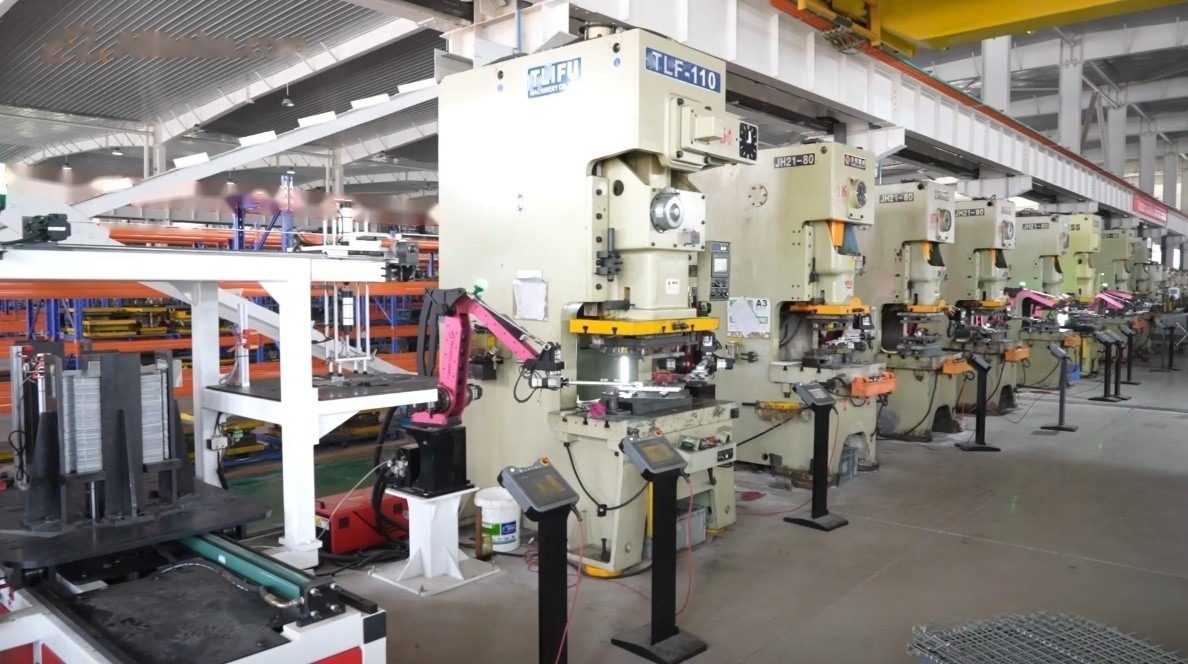
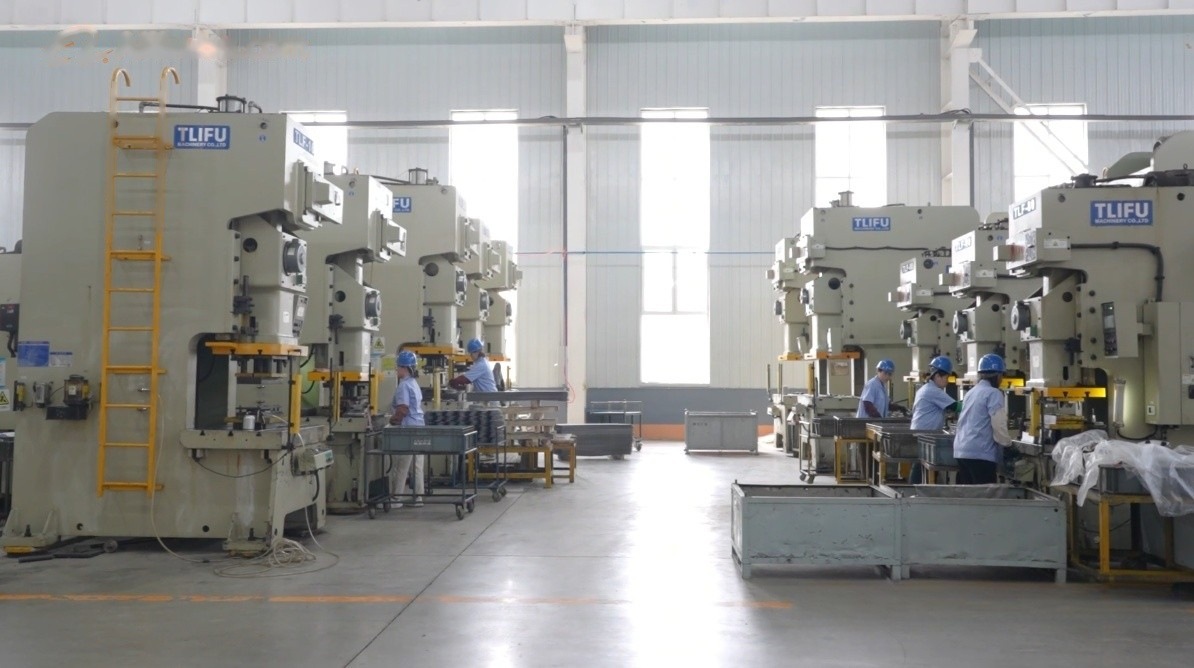
    Factory vs trading company - the XCWY manufacturing plant in Nanpi County
    The XCWY manufacturing plant in Nanpi County, Hebei

    Why factory vs trading company changes outcomes

    Quality control authority

    A factory owns the process. It can change a die clearance, adjust a weld sequence, re-run a first article or stop a line. A trader can only relay a request to the actual manufacturer and hope it is acted on. When a dimension drifts, the difference between those two situations is measured in weeks.

    Technical response quality

    Ask a factory why a bend radius is causing cracking and you get an answer about material temper and grain direction. Ask a trader and you often get a promise to check with the workshop. The quality of technical dialogue during quotation is one of the most reliable early indicators of what support will look like later.

    Cost structure and what a low price means

    A trader’s price includes a margin on top of the factory price. If a trader’s quotation is lower than a factory’s, the difference is coming from somewhere — a cheaper sub-supplier, a thinner material, a lower-grade alloy, or corners cut in inspection. A suspiciously low price from an intermediary deserves more scrutiny than a high one.

    Traceability

    Traders sometimes shift orders between factories between batches, which is invisible to you until batch three behaves differently from batch one. When the manufacturing source can change without notice, process capability data and first article approvals lose much of their meaning.

    Seven checks that settle factory vs trading company

    1. Ask for the ISO registration number and read the scope

    Not the logo, not a PDF image — the registration number as text, so you can type it into a registry. Then read the scope wording carefully. A certificate scoped to “trading services” or “sales” describes a trading company, however impressive the certificate looks.

    Ours reads “Production and Sales of Metal Stamping Parts (Including Export)”, registration 34025Q30296R0S, issued by Beijing Tongguan Inspection and Certification, accredited by IAF and CNAS under C340-M, valid to 29 May 2028, verifiable at cnca.gov.cn. Scope details are published on our certifications page.

    2. Ask which machine will run the part, by model number

    A factory answers immediately and specifically, because the person quoting knows what is on the floor. Ours would answer with the TLIF TLF-160 or LAIFU 400N press, the JFY TPR8-100 press brake with its 3,200 mm bed, the 12,000 W fiber laser or the HDL-OKK DMU38 five-axis centre, depending on the part.

    A trader gives a generic capability description or offers to confirm with the workshop. That delay is the tell.

    3. Request a live video walk-through on a named day

    This is the single most effective test available. Ask for a live, unedited video call in which someone walks to the specific machine that would run your part and points the camera at it. A factory schedules it on a business day. A trader postpones, offers a pre-recorded video, or sends photographs.

    Insist on live. Photographs and edited videos can come from anywhere.

    4. Ask a technical question with no commercial content

    Something like: what minimum inside bend radius do you recommend for 3 mm 6061-T6, and why? A factory engineer answers with the material’s low ductility in the T6 temper and suggests two to three times thickness, or proposes annealing. A trader forwards the question.

    You are testing whether an engineer exists on the other side of the conversation, and whether you will have access to one after the order is placed.

    5. Ask who owns the tooling you pay for

    The answer should be unambiguous and in writing: the tooling belongs to you, is used only for your orders, and is released on transfer. Vague answers here are a genuine commercial risk, because tooling you have paid for but cannot retrieve is leverage against you at every subsequent negotiation.

    6. Check the address and the registered business scope

    A manufacturer’s registered address is an industrial one. An office address in a commercial district for a company claiming a 15,000 square metre plant is a contradiction worth raising. Chinese business registration also records a business scope, which distinguishes manufacturing from trade.

    7. Ask what they do not do

    Every factory has boundaries. Ask what processes are outsourced, what tolerances are beyond them, and which certifications they do not hold. A factory answers plainly; the answer is a normal engineering fact, not an embarrassment.

    We hold ISO 9001:2015 only. We do not hold ISO 13485, IATF 16949, AS9100 or UL listing. If your programme requires any of those from the manufacturer, we are not the right supplier, and it is better that you know before qualification rather than during your audit. A supplier who claims to do everything at any tolerance with every certification is describing a sales position, not a factory.

    Comparison table

    Check Typical factory response Typical trading company response
    ISO registration number Given as text, scope covers production Logo or image; scope covers trading or sales
    Machine for your part Named model, answered immediately Generic capability list, or will confirm later
    Live video tour Scheduled on a named business day Postponed, or pre-recorded video sent
    Technical DFM question Engineering answer with reasoning Forwarded to an unnamed workshop
    Tooling ownership Yours, in writing, released on transfer Unclear, or retained by supplier
    Registered address Industrial site matching stated area Commercial office
    Stated limitations Specific processes and certificates named as absent Claims to cover everything
    Response to third-party inspection Welcomed, facilities provided Resistance or added conditions

    When a trading company is the right choice

    There are legitimate cases, and ignoring them would be dishonest.

    • Multi-process kits from many sources. If you need stampings, castings, injection moulded parts and fasteners consolidated into one shipment and one invoice, an intermediary that manages several factories may genuinely be simpler than managing them yourself.
    • Very small quantities across many part numbers. Factories have minimums. A trader aggregating small orders across several buyers can sometimes beat a factory’s floor.
    • No internal sourcing capacity. If you have no one to manage supplier qualification, inspection and logistics, paying an intermediary to do it is a reasonable trade.
    • Market entry with unproven demand. Buying small quantities through a trader to test a market before committing to tooling is a sound risk-limiting move.

    The key point is that these are conscious decisions. Paying a trading margin to solve a coordination problem is rational. Paying it because you believed you were dealing with the factory is not.

    What direct factory access changes in practice

    When the manufacturer answers directly, four things change. Design-for-manufacture feedback arrives with the quotation rather than after the first bad batch, because the person reviewing the drawing knows what the tooling will do. Corrective action is faster, because the same organisation that made the defect controls the fix — we issue an 8D report within 48 hours. Process changes can be discussed rather than relayed. And the inspection records you receive were generated by the plant that made the parts, not compiled by an intermediary.

    Our four inspection gates — incoming material, first article, in-process sampling and final AQL per ISO 2859-1 — are described on the quality page, and the plant itself, including equipment model numbers, on the factory page. Both exist so that the checks in this article can be run against us as easily as against anyone else.

    Frequently Asked Questions

    How can I tell if a supplier is a factory or a trading company?

    The fastest test is to request a live, unedited video walk-through to a named machine on a specific business day. A factory schedules it; a trader postpones or sends a pre-recorded video. Combine that with checking the ISO certificate scope for production wording rather than trading wording.

    Are trading companies more expensive than factories?

    Usually, because a margin is added to the factory price. If a trader quotes below a factory, examine what is different — material grade, thickness, inspection level or the sub-supplier chosen. An unexplained low price from an intermediary warrants more scrutiny, not less.

    Is an ISO 9001 certificate proof that a supplier manufactures?

    No. The scope wording is what matters. A certificate can cover trading or sales activities rather than production, and such certificates are genuine while telling you nothing about manufacturing capability. Read the scope statement and verify the registration number in the national registry.

    What should I ask about tooling ownership?

    Ask who owns tooling you pay for, whether it is used for any other customer, and how it is released if you move suppliers. The answer should be in writing before the tooling order is placed. Ambiguity here is commercial leverage against you in every later negotiation.

    Can a factory also act as a trading company for some items?

    Yes, and it is common for a manufacturer to source complementary items such as fasteners, castings or plastic parts to complete an assembly. That is legitimate as long as it is disclosed. Ask specifically which items are made in-house and which are bought in.

    Is it worth visiting the factory in person?

    For a significant programme, yes, though a live video tour resolves most questions at no cost. An in-person visit adds most value when you need to assess process control, housekeeping and inspection practice rather than simply confirm the plant exists. Third-party audits by SGS, Bureau Veritas or similar are a reasonable substitute where travel is impractical.

    Run these checks on us

    Every test in this article can be applied to XCWY, which is the point of publishing them. Request a live video tour, verify registration 34025Q30296R0S at cnca.gov.cn, or send a drawing and see whether the technical response reads like an engineer wrote it. Quotations return within 3 business hours with design-for-manufacture feedback included. Email xcwystamping@xcwybj.com or use the quote request form.

  • China vs Domestic Metal Parts Sourcing: A Total Cost Comparison

    Piece price is the least useful number in the China vs domestic metal parts sourcing comparison, because it is the one number that excludes almost everything that varies between the two options. Freight, duty, tooling, inventory carrying cost, inspection, travel, qualification effort and the cost of a delayed line are all real, and several of them move in the opposite direction to piece price.

    The honest position is that neither option wins categorically. Overseas manufacturing usually offers lower tooling cost and lower unit cost at volume. Domestic manufacturing usually offers shorter lead times, lower minimum quantities, easier communication and lower supply-chain risk. Which advantage matters depends on your volume, your design stability and how expensive a stockout is for you.

    This guide sets out the full cost structure so the comparison can be made on complete information, including the cases where we would tell you to source domestically.

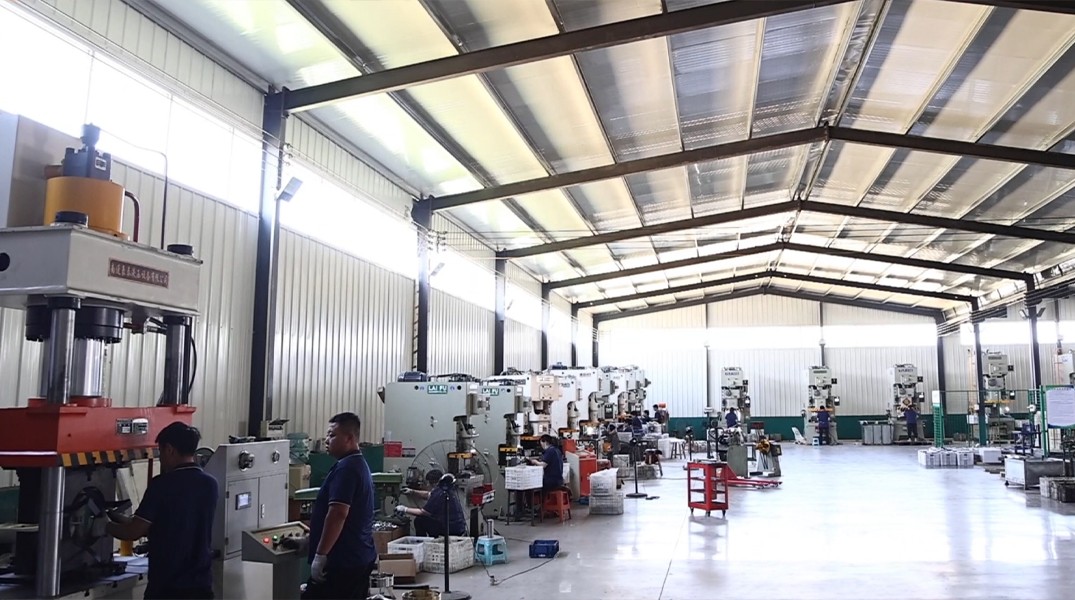
    China vs domestic metal parts sourcing - XCWY production line in Nanpi, Hebei
    An XCWY production line in Nanpi County, Hebei

    China vs domestic metal parts sourcing starts with landed cost

    A defensible comparison includes every line below, for both options.

    Cost element Overseas sourcing Domestic sourcing
    Piece price Typically lower, especially at volume Typically higher
    Tooling cost Typically lower Typically higher
    Freight Significant — sea or air Minor
    Duties and tariffs Applies; depends on HS code and origin None
    Customs brokerage Applies per shipment None
    Transit time Weeks by sea Days
    Safety stock required Higher — long replenishment cycle Lower
    Inventory carrying cost Higher Lower
    Third-party inspection Often used Rarely needed
    Supplier qualification effort Higher — remote audit or travel Lower
    Cost of a quality escape Higher — long correction loop Lower — parts can be reworked locally
    Currency exposure Present None

    Two lines dominate the outcome for most buyers. The first is tooling, which is a one-off and therefore favours overseas sourcing more strongly the lower your volume is — a counter-intuitive result, since low volume otherwise favours domestic. The second is inventory carrying cost, which is recurring and works steadily against overseas sourcing, especially for high-value parts.

    Where overseas sourcing genuinely wins

    Tooling-intensive parts

    Stamping dies, draw tooling and progressive die sets represent the largest single cost difference in most comparisons. If a programme needs a multi-stage progressive die, that difference can be the deciding factor by itself — and it is a fixed cost, so it does not require high volume to pay off.

    Stable, repeating volumes

    Long transit times are only a problem if demand is unpredictable. A part ordered on a regular cycle against a stable forecast absorbs a six-week lead time comfortably. A part ordered reactively does not.

    Labour-intensive operations

    Hand welding, weld dressing, polishing, deburring and manual assembly carry a persistent labour-cost differential. The more of these a part requires, the larger the gap.

    Access to a manufacturing cluster

    Where a supplier sits inside a dense industrial cluster, its own supply chain shortens. Our plant is in Nanpi County, a designated National Hardware and Machinery Export Base, which means raw material, tooling steel, heat treatment and plating sit within a short drive. That reduces internal lead time and material cost in a way that is structural rather than negotiable.

    Where domestic sourcing is the better answer

    We would recommend domestic sourcing in these situations, and saying so is more useful than pretending otherwise.

    • Prototypes and design iteration. When the design will change three times before it freezes, transit time dominates everything and a local shop that can turn parts around in days is worth paying for.
    • Genuinely urgent requirements. If a line is down, air freight from anywhere is expensive and slow relative to a domestic supplier’s response.
    • Very low annual volumes with no tooling. A few dozen laser-cut and bent brackets per year will not recover the freight, customs and qualification overhead.
    • Certification requirements beyond the supplier’s scope. If your programme requires ISO 13485, IATF 16949 or AS9100 certification from the manufacturer, verify the certificate before anything else. We hold ISO 9001:2015 only — registration 34025Q30296R0S — and if your specification requires more than that, we are not the right supplier regardless of price.
    • Highly volatile demand. If forecasts routinely miss by large margins, the safety stock needed to cover a long replenishment cycle can erase the unit-cost saving entirely.

    Lead time: the part buyers model worst

    Total lead time is not the transit time. It is the sum of quotation, drawing review, tooling build where applicable, sample production, sample approval, production, inspection, booking, transit, customs clearance and inland delivery. Sample approval in particular is frequently underestimated, because it depends on how quickly your own engineering team reviews and signs off — a dependency inside your organisation, not the supplier’s.

    Three things shorten the cycle materially:

    1. Send a complete RFQ package first time. Controlled drawing with revision, material grade and temper, quantities, critical dimensions, finish, inspection requirements and destination. Incomplete packages generate question-and-answer rounds that each cost a day or more across time zones.
    2. Approve samples decisively. Define acceptance criteria before the sample arrives so the review is a measurement exercise rather than a discussion.
    3. Order on a schedule. Blanket orders with scheduled releases let a supplier plan material and capacity instead of reacting to each purchase order.

    Quotation speed is a reasonable early signal of how a supplier will behave later. We return quotations within 3 business hours, with design-for-manufacture feedback included rather than charged separately.

    Risk management that actually works

    The realistic concerns with overseas sourcing are quality consistency, material substitution, communication gaps and intellectual property. Each has a practical control.

    Verify the certificate, not the logo

    Ask for the registration number in text form, then check it in the issuing registry. Ours is 34025Q30296R0S, issued by Beijing Tongguan Inspection and Certification, accredited by IAF and CNAS under C340-M, valid to 29 May 2028, and verifiable at cnca.gov.cn. Check the scope wording too: a certificate covering trading services tells you nothing about manufacturing capability. Full details are published on our certifications page.

    Confirm the supplier is a factory

    Ask which machine will run the part, by model number. Ask for a live video walk-through of that machine on a specific day. A trading company will produce vague answers or a pre-recorded video. This single test is the most efficient filter available and it costs nothing.

    Require material traceability

    Specify EN 10204 3.1 mill test certificates on the purchase order. Material substitution is the most common quality failure in low-cost sourcing, and documentation traceable to a mill heat number is the practical defence.

    Use third-party inspection early

    SGS, Bureau Veritas, TÜV or Intertek can inspect before shipment. It is worth doing for the first few orders with a new supplier, then tapering as the relationship establishes a record. A supplier that resists third-party inspection has told you something important.

    Protect the design

    Sign an NDA before sending files. Keep tooling ownership explicit in writing, including who holds it and how it is released. For assemblies, consider splitting critical sub-components across suppliers so no single supplier holds the complete design.

    China vs domestic metal parts sourcing: a structured way to decide

    1. Build a landed cost model for both options with every line from the table above, using your real volume.
    2. Add inventory carrying cost for the safety stock each option requires — this is where long lead times show their true cost.
    3. Check certification requirements against what each supplier actually holds, in writing.
    4. Assess your design stability honestly. Unstable designs favour domestic sourcing.
    5. Quantify the cost of a stockout. High-cost stockouts justify paying for shorter lead times.
    6. Run a pilot order before committing a programme, and inspect it properly.

    A hybrid strategy is often strongest: source high-volume, tooling-intensive, stable parts overseas, and keep prototypes, urgent items and low-volume specials domestic. That is a portfolio decision rather than a single supplier decision, and it captures most of the cost advantage while keeping the risk bounded. If you want to see how our quality system and process capability map onto your part list, the fastest route is to send a representative drawing.

    Frequently Asked Questions

    Is sourcing metal parts from China always cheaper?

    No. Unit price and tooling are usually lower, but freight, duties, brokerage, inventory carrying cost and inspection can erase that saving on low-volume or urgent parts. Tooling-intensive, high-volume, labour-intensive parts show the largest advantage; small quantities of simple cut-and-bend parts often do not justify it.

    What is the realistic total lead time for overseas metal parts?

    Total lead time is the sum of quotation, drawing review, tooling build, sample production and approval, production, inspection, booking, sea transit and customs clearance — not transit alone. Sample approval is frequently the largest controllable element and depends on your own review speed. Model the whole chain rather than the shipping leg.

    How do I verify a Chinese supplier is a real factory?

    Ask for the ISO registration number in text, verify it in the national registry, and check that the certificate scope covers production rather than trading. Then ask which machine model will run your part and request a live video walk-through of it on a specific day. Trading companies fail the equipment and video test quickly.

    What documentation should I require with each shipment?

    Request EN 10204 3.1 mill test certificates for materials, a signed first article inspection report before production release, in-process inspection records and final AQL results. For automotive programmes, PPAP Level 3 documentation may also be required. Specify these on the purchase order rather than assuming they are standard.

    What minimum order quantity should I expect?

    Our production minimum is 100 pieces, rising to 300 for welded assemblies, with samples available from a single piece and CNC machined parts viable from one piece. Minimums vary considerably by supplier and process, and a very low stated minimum sometimes signals a trading company rather than a factory. Confirm the minimum together with the price break structure.

    When should I choose a domestic supplier instead?

    Choose domestic when the design is still changing, when the requirement is urgent, when annual volumes are very low with no tooling involved, when demand is highly volatile, or when your programme requires a certification the overseas supplier does not hold. In those situations the transit time and qualification overhead outweigh the unit-cost advantage.

    Send a representative part and we will model it honestly

    The only way to settle this comparison is with your actual parts and volumes rather than general arguments. Send a drawing and annual quantity and we will return a quotation within 3 business hours, together with a view on whether the part is a good fit for overseas sourcing at all. If it is not, we will say so. Email xcwystamping@xcwybj.com or use the quote request form.